How Do You Choose the Right Transfer Switch for Generators for a Farm Setup?
CONTACT US
Table of Contents
- Introduction
- What Is a Transfer Switch for Generators
- How Does a Generator Transfer Switch Work
- Why Farms Need a Dedicated Transfer Switch
- Types of Transfer Switches for Farm Use
- How to Determine the Right Load Requirements
- Safety and Compliance Considerations
- Common Installation Planning Factors
- Maintenance and Long-Term Reliability
- Conclusion
- Book a Generator Transfer Switch Consultation
- Frequently Asked Questions
Key Takeaways
- A transfer switch for generators is essential for safely connecting backup power to farm electrical systems.
- Proper sizing depends on total load requirements, including motors, pumps, and essential equipment.
- Manual and automatic transfer switches serve different operational needs in farm environments.
- Safety standards and code compliance are important when installing any transfer switch for standby generator systems.
- Understanding system compatibility helps prevent overloads and improves long-term electrical reliability.
Introduction
Choosing the right transfer switch for generators in a farm setup is important for maintaining safe and stable backup power during outages. Farms in areas like Harpers Ferry, IA often rely on electricity for irrigation systems, livestock equipment, refrigeration, and lighting, making power continuity essential for daily operations.
A properly selected transfer switch helps connect a generator to a farm's electrical system without backfeeding or unsafe connections. It also ensures that power is distributed only where it is needed, based on the system's load capacity and configuration. Understanding how these switches work and what factors influence selection helps property owners make informed decisions.
What Is a Transfer Switch for Generators
A transfer switch for generators is an electrical device that safely shifts a building's power source from the utility grid to a backup generator. It prevents both sources from being connected at the same time, which is critical for safety and system protection.
In a farm environment, this device often connects to essential circuits such as water pumps, barns, grain systems, and control panels. It acts as the central control point for managing backup electricity during outages.
How Does a Generator Transfer Switch Work
Understanding how a generator transfer switch works helps clarify its role in a backup power system.
When utility power is available, the switch keeps the farm connected to the grid. During an outage, the switch isolates the utility line and connects the generator to the electrical system. This process ensures that electricity flows in only one direction at a time.
Some systems require manual operation, where a user physically changes the switch position. Others use automatic controls that detect power loss and switch sources without intervention. Both methods aim to maintain safe electrical separation between grid and generator power.
Why Farms Need a Dedicated Transfer Switch
Farms have unique electrical demands that differ from residential setups. Equipment such as irrigation pumps, ventilation systems, and feed processing units often require consistent power management.
A dedicated transfer switch for standby generator systems helps:
- Protect sensitive agricultural equipment
- Prevent dangerous backfeed into utility lines
- Organize power distribution across essential farm circuits
- Improve control during emergency power transitions
Without a proper transfer switch, there is a higher risk of electrical faults or inefficient generator usage.
Types of Transfer Switches for Farm Use
Selecting the right type depends on how the farm operates and how frequently backup power is needed.
Manual Transfer Switches
Manual systems require someone to physically switch power sources. They are often used in smaller setups or where outages are infrequent. These systems are typically more affordable but require user involvement during emergencies.
Automatic Transfer Switches
Automatic systems detect outages and switch power sources without manual input. They are commonly used in larger or livestock-dependent farms where downtime must be minimized.
Service Entrance Rated Switches
These combine the functions of a main disconnect and transfer switch. They are often used when simplifying system design or reducing panel complexity is important.
How to Determine the Right Load Requirements
One of the most important steps in choosing a transfer switch for generators is calculating load requirements.
Farm owners should consider:
- Total wattage of essential equipment
- Starting loads for motors and pumps
- Continuous vs intermittent power needs
- Priority circuits that must remain active
Equipment like irrigation pumps or refrigeration units often require additional surge capacity. This means the transfer switch must support both running and startup loads without overloading the system.
Working with a licensed electrician helps ensure load calculations are accurate and aligned with the generator's capacity.
Safety and Compliance Considerations
Electrical safety is a key part of any farm generator setup. A transfer switch helps prevent backfeeding, which can be dangerous for utility workers and equipment.
Important considerations include:
- Compliance with local electrical codes in Iowa
- Proper grounding and bonding of equipment
- Correct installation of isolation mechanisms
- Use of certified and rated equipment for agricultural environments
In Harpers Ferry, IA, agricultural electrical systems must follow standards that ensure both safety and operational reliability. Proper installation reduces risks and supports long-term system stability.
Common Installation Planning Factors
Before installing a transfer switch for generators, several planning factors should be reviewed:
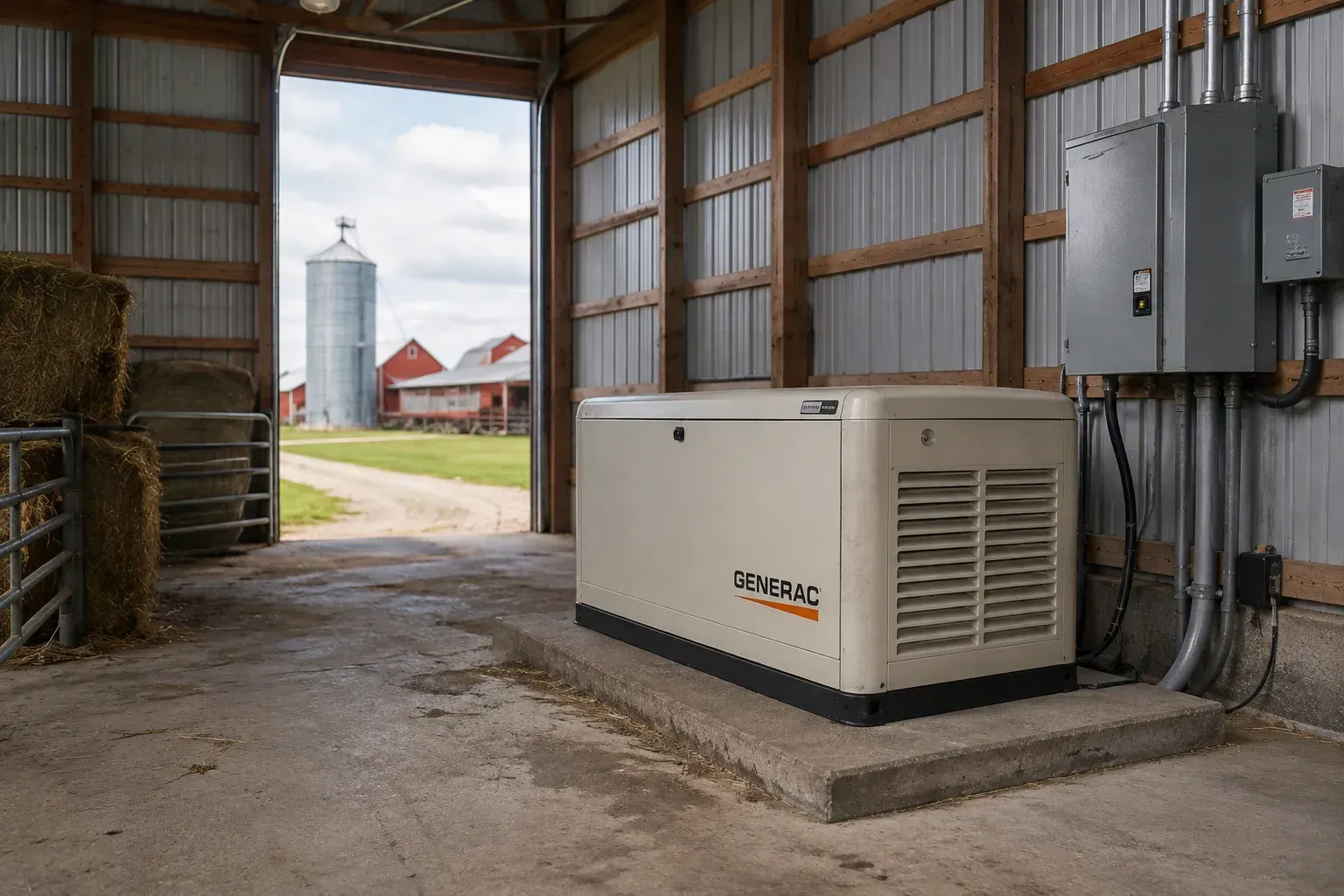
- Location of electrical panels and generator placement
- Distance between generator and transfer switch
- Weather protection for outdoor installations
- Accessibility for maintenance and inspections
- Integration with existing farm electrical infrastructure
Proper planning helps reduce installation issues and improves system performance during actual outages.
Maintenance and Long-Term Reliability
Like any electrical system component, transfer switches require periodic inspection to ensure reliability.
Maintenance typically includes:
- Checking for corrosion or loose connections
- Testing switch operation under controlled conditions
- Inspecting enclosure integrity
- Verifying labeling and circuit identification
Regular maintenance helps ensure the system performs correctly when backup power is needed. It also supports early detection of potential issues before they affect farm operations.
Conclusion
Selecting the right transfer switch for generators in a farm environment involves understanding electrical load requirements, system compatibility, and safety standards. Farms in Harpers Ferry, IA often rely on consistent power for essential operations, making proper backup systems an important part of infrastructure planning.
By learning how transfer switches function and the differences between manual and automatic systems, property owners can make more informed decisions that support safe and reliable energy management.
Book a Generator Transfer Switch Consultation
If you are planning or upgrading a farm backup power system, professional guidance can help ensure proper system design and safe installation. Whit's Electric LLC provides informational support and electrical services for agricultural properties in Harpers Ferry, IA. Contact us via email at wexford1332@gmail.com or call (563) 419-8218 for consultation and advice.
Frequently Asked Questions
What size transfer switch do I need for my farm generator?
The size depends on the total electrical load of essential farm equipment, including motor startup requirements and continuous usage needs.
Can I install a transfer switch myself?
Installation should be handled by a qualified electrician to ensure compliance with safety codes and proper system integration.
What is the difference between manual and automatic transfer switches?
Manual switches require physical operation during outages, while automatic switches detect power loss and switch sources automatically.
Do all generators require a transfer switch?
Most permanently connected standby generators require a transfer switch to safely manage power transitions and prevent backfeeding.
How often should a transfer switch be inspected?
It is generally recommended to inspect the system regularly, especially before peak usage seasons or during routine electrical maintenance.
Related Posts