How Often Should Barns in Waukon, Iowa Have Their Electrical Wiring Inspected?
CONTACT US
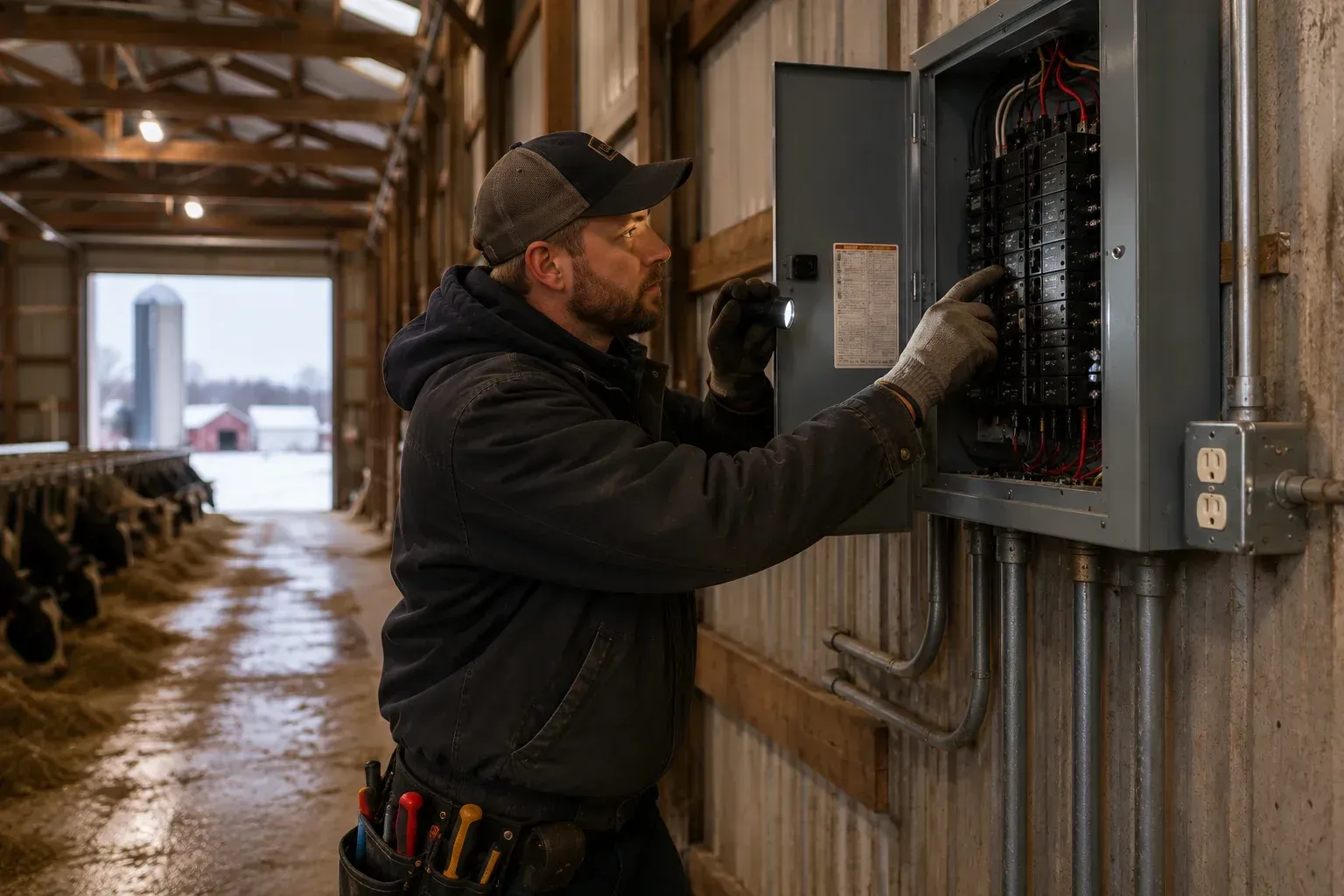
Table of Contents
- Introduction
- The Short Answer: Every 3 to 5 Years for Most Barns
- Why Barn Wiring Wears Out Faster Than House Wiring
- Signs Your Barn Needs an Inspection Sooner
- What a Barn Electrical Wiring Inspection Covers
- Situations That Call for an Extra Inspection
- Matching Inspection Frequency to Your Barn
- Conclusion
- Noticed Flickering Lights or Warm Outlets in Your Barn?
- Frequently Asked Questions
Key Takeaways
- Most barns in Waukon, Iowa benefit from a professional electrical wiring inspection every 3 to 5 years, with older barns and busy livestock buildings checked every 1 to 3 years.
- Barn environments are harder on wiring than houses. Dust, moisture, ammonia, rodents, and vibration all speed up wear.
- Warning signs like flickering lights, tripped breakers, or chewed insulation call for an inspection right away, not at the next scheduled date.
- Electrical faults are among the leading causes of barn fires, and many start in wiring that looks fine from the ground.
- Extra inspections make sense after severe weather, equipment upgrades, or buying a property, regardless of when the last one happened.
Introduction
Most barns in Waukon, Iowa should have their electrical wiring professionally inspected every 3 to 5 years, and older barns or buildings housing livestock often need a look every 1 to 3 years. That window is shorter than what most homeowners follow because barn conditions, including dust, moisture, ammonia, and rodents, break down wiring far faster than anything inside a climate-controlled house.
For farmers and property owners in Allamakee County, this is worth taking seriously. Electrical faults rank among the leading causes of barn fires across the Midwest, and a single fire can take equipment, feed, livestock, and decades of work at once. Licensed electrical services working in the Waukon area regularly find damaged wiring in barns where everything still seemed to run normally.
This article explains why barn wiring deteriorates the way it does, what an inspection actually covers, which warning signs should move up your timeline, and how to set a schedule that fits your building.
The Short Answer: Every 3 to 5 Years for Most Barns
No single Iowa law tells farmers how often to inspect barn wiring. The 3 to 5 year guideline comes from how agricultural buildings are treated in electrical safety practice, insurance recommendations, and the National Electrical Code, which has its own requirements for agricultural structures.
Treat it as a baseline, not a rule. A newer machine shed with modern wiring and light use can reasonably sit at the 5 year end. A 60-year-old dairy barn with original wiring, constant moisture, and equipment running daily belongs at the short end, or even on an annual schedule.
Insurance carriers sometimes have their own expectations too. Some farm policies ask about the age and condition of electrical systems, and a documented inspection history can matter when questions come up after a claim.
Why Barn Wiring Wears Out Faster Than House Wiring
A house protects its wiring. A barn works against it. That difference is the whole reason barn electrical inspection frequency needs to be tighter than the once-a-decade habit common with homes.
Dust and Debris
Hay chaff, grain dust, and bedding particles settle on junction boxes, outlets, and light fixtures. Dust buildup traps heat around connections and, in enough concentration, becomes fuel. A warm connection that would be harmless in a clean panel can smolder in a dusty one.
Moisture and Corrosive Air
Livestock produce humidity, and manure produces ammonia. Both corrode copper connections, rust metal boxes, and degrade insulation over time. This is why the electrical code treats livestock confinement areas differently from ordinary dry buildings and calls for corrosion-resistant, dust-tight materials.
Rodents and Wildlife
Mice, rats, squirrels, and raccoons chew wire insulation. It is one of the most common problems electricians find in Northeast Iowa barns. A chewed wire can sit hidden inside a wall or above a ceiling for years, arcing quietly, before anything visible goes wrong.
Vibration and Physical Damage
Fans, augers, compressors, and doors create vibration that slowly loosens electrical connections. Add the occasional bump from a skid loader or a swinging gate, and barn conduit takes hits a house never sees. Loose connections generate heat, and heat is where most electrical fires begin.
Signs Your Barn Needs an Inspection Sooner
The calendar is only half the answer. These symptoms mean the wiring needs professional attention now, whatever the schedule says:
- Breakers that trip repeatedly on the same circuit
- Flickering or dimming lights, especially when fans or motors start up
- Warm outlets, switches, or panel covers
- A burning or hot plastic smell with no obvious source
- Visible damage, such as chewed insulation, cracked wiring, or rusted boxes
- Buzzing or sizzling sounds from panels, outlets, or fixtures
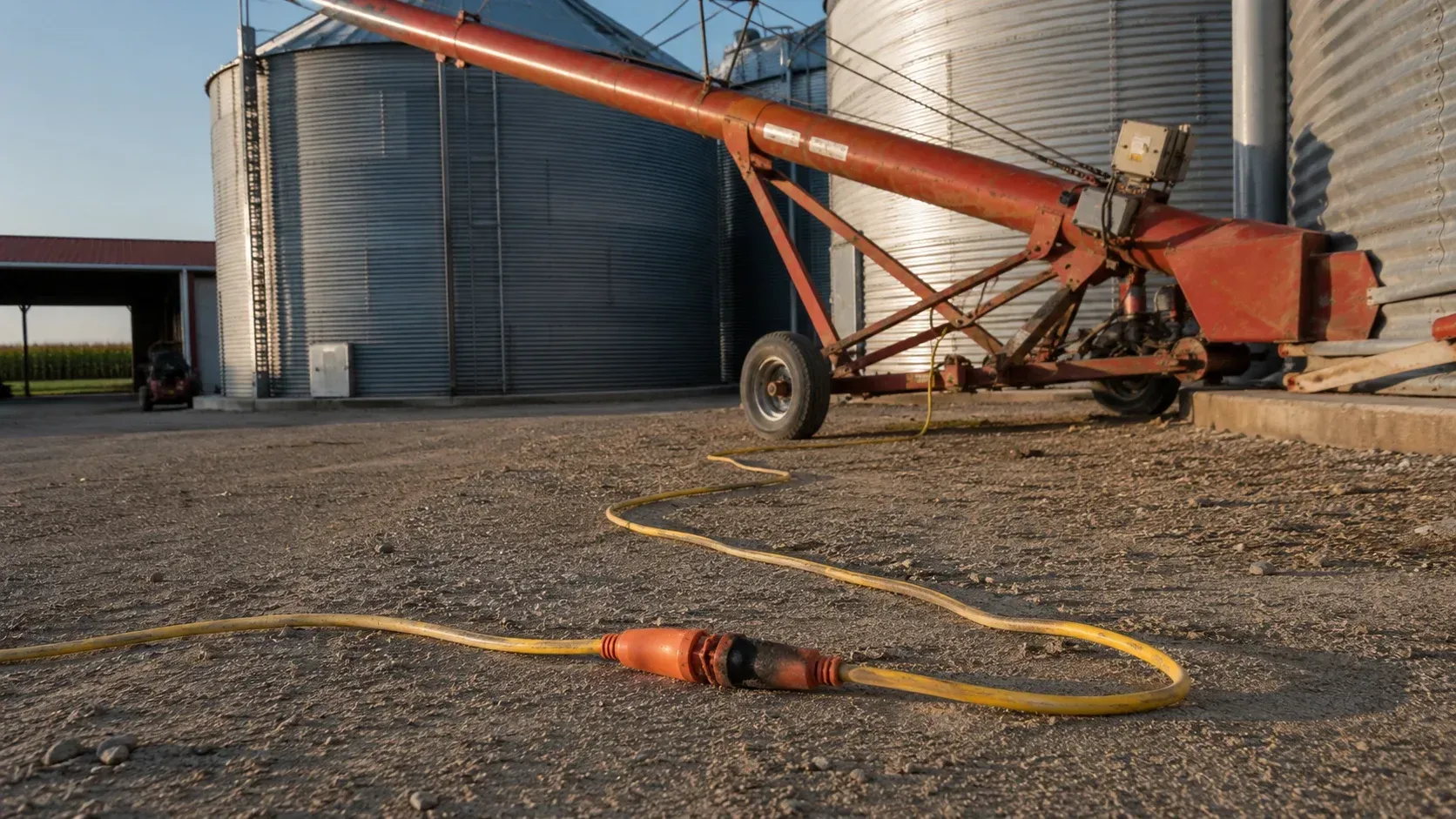
- Extension cords used as permanent wiring, a common shortcut that adds risk over time
None of these should be watched and waited on. Each one points to a fault that tends to get worse, and barns give a fire more fuel and fewer early witnesses than houses do.
What a Barn Electrical Wiring Inspection Covers
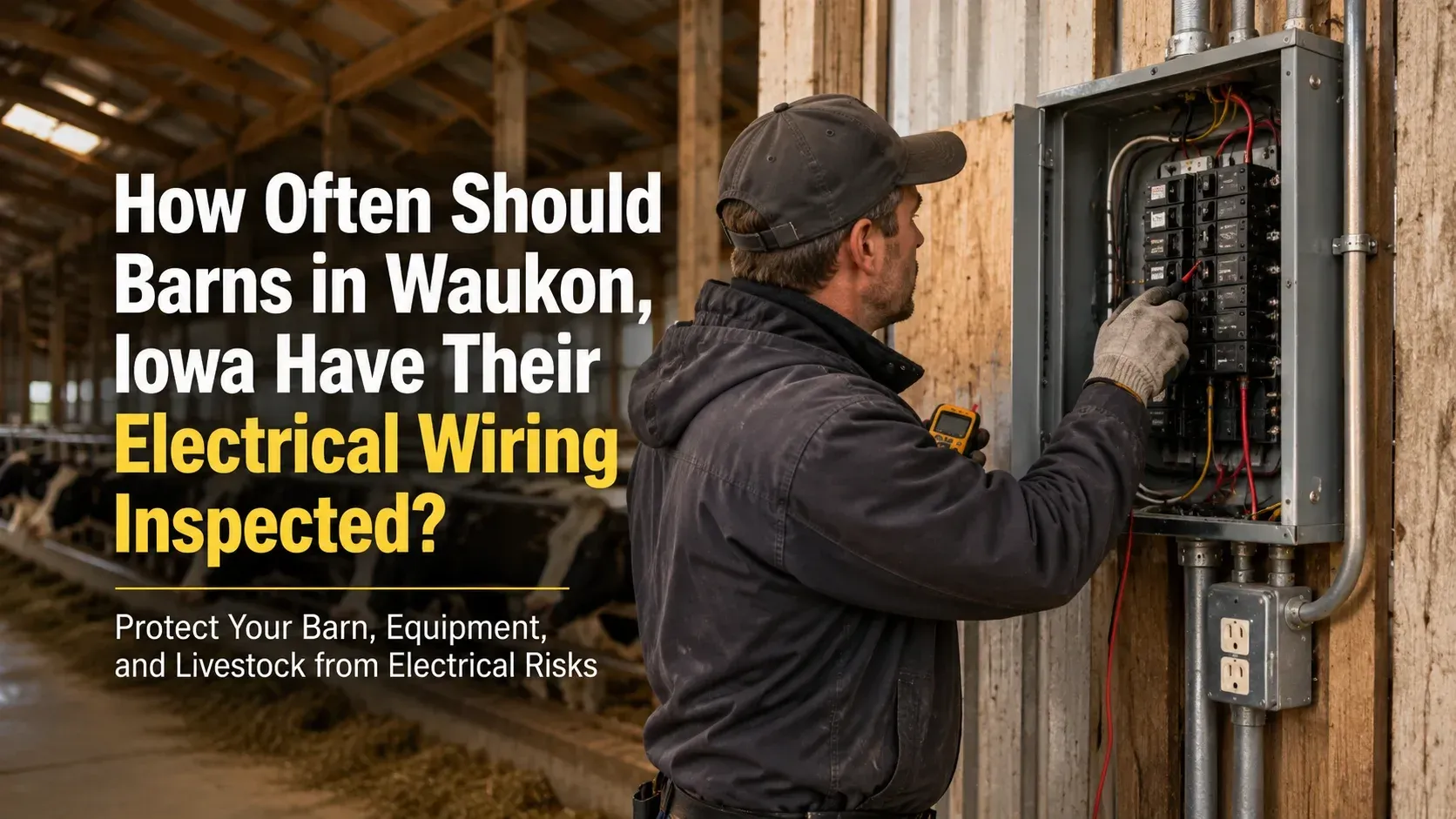
A proper barn electrical wiring inspection goes well beyond flipping switches. A licensed electrician typically works through:
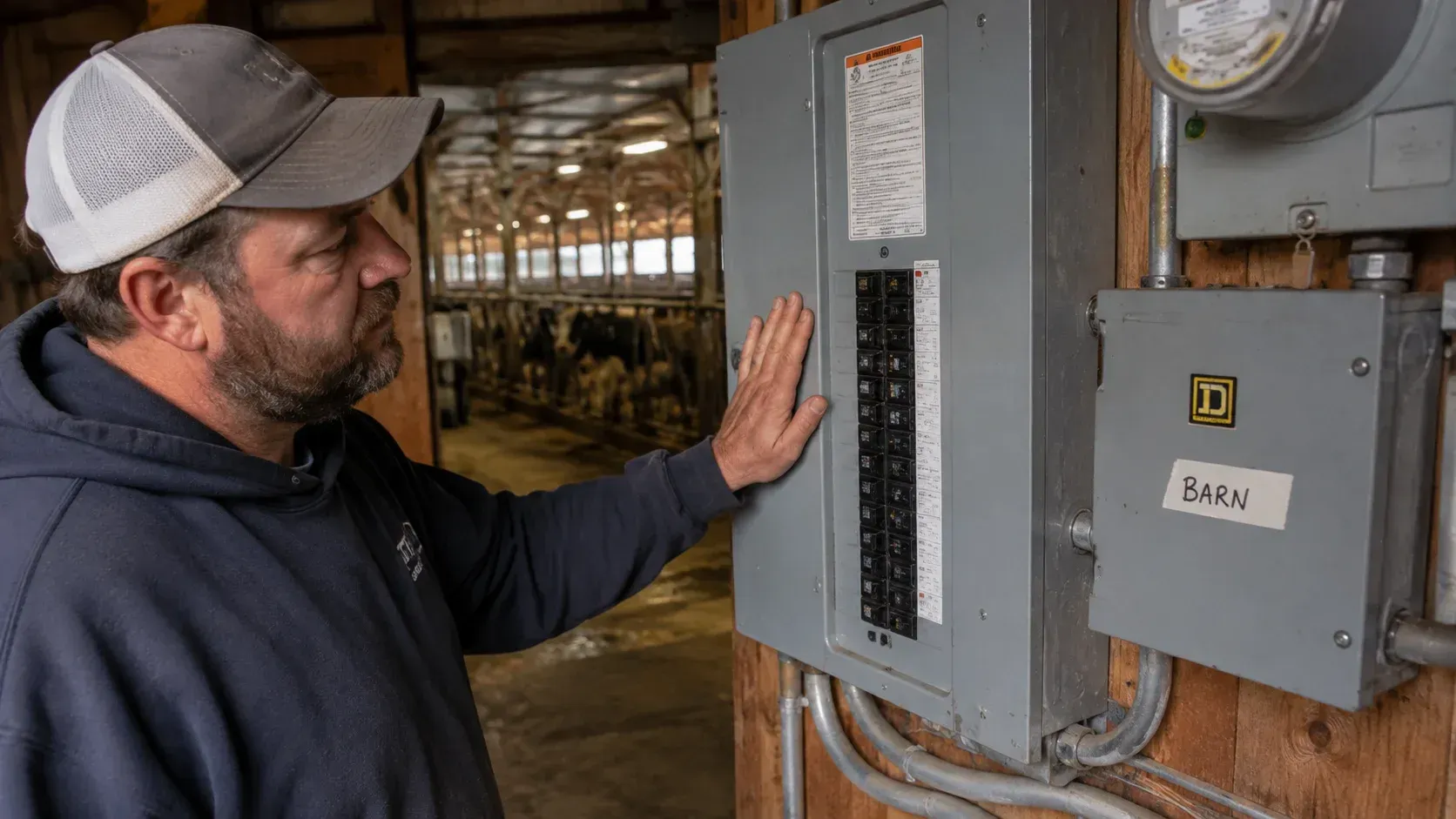
The service panel. Checking for corrosion, loose lugs, double-tapped breakers, correct breaker sizing, and signs of overheating. Many older barns still run on undersized panels installed decades before modern equipment loads existed.
Wiring condition and type. Identifying aging insulation, rodent damage, splices made outside junction boxes, and outdated wiring methods that no longer meet code for agricultural buildings.
Grounding and bonding. This matters more in barns than almost anywhere else. Poor grounding in livestock buildings can cause stray voltage, which affects animal comfort and, in dairy operations, can influence drinking and milking behavior.
Outlets, switches, and fixtures. Confirming that devices in wet or dusty areas are rated for those conditions and that GFCI protection is in place where required. Sealed, dust-tight fixtures are the standard for farm lighting in livestock areas for exactly this reason.
Equipment connections. Fans, waterers, heaters, augers, and other farm electrical equipment each get checked for proper circuits, secure connections, and signs of overloading.
A thorough inspection ends with a written summary of what was found, what needs repair soon, and what can wait. That record is useful for planning and for insurance files.
Situations That Call for an Extra Inspection
Some events justify an inspection outside the normal rotation:
After severe weather. Lightning strikes, ice storms, and wind damage can stress a barn's electrical system in ways that are not visible. Northeast Iowa sees all three most years.
After adding equipment. New ventilation fans, a grain dryer, heated waterers, or a welder in the shop all change the load on existing circuits. Wiring that handled the old demand may be undersized for the new one.
When buying a farm property. A general home inspection rarely covers outbuildings in depth. A dedicated electrical inspection of the barns tells you what you are actually buying.
After rodent activity or water intrusion. If you have dealt with a mouse problem or a roof leak near wiring, assume the electrical system may have been affected until it is checked.
Matching Inspection Frequency to Your Barn
As a practical guide for farm electrical safety Iowa property owners can plan around:
- New or recently rewired barns, light use: every 5 years
- General purpose barns and machine sheds: every 3 to 5 years
- Livestock barns with daily equipment use: every 1 to 3 years
- Barns over 40 years old with original wiring: every 1 to 2 years, until the wiring is updated
- Dairy or confinement buildings with high moisture: annually is reasonable
Pair the professional schedule with your own quick monthly walk-through. Look for chewed wires, dusty fixtures, damaged boxes, and anything warm or discolored. The owner's eyes between inspections catch a lot.
Conclusion
Barns in Waukon and the surrounding Allamakee County area generally need a professional wiring inspection every 3 to 5 years, and older or heavily used livestock buildings need one more often. The reason is simple: dust, moisture, ammonia, rodents, and vibration wear barn wiring down faster than house wiring, and electrical faults remain one of the most common causes of barn fires.
The schedule is a starting point, not a substitute for attention. Warning signs like tripping breakers, flickering lights, or a burning smell deserve a professional look right away, and events like storms, new equipment, or a property purchase reset the clock. An informed inspection routine costs far less than what it protects.
Noticed Flickering Lights or Warm Outlets in Your Barn?
Those small symptoms are usually the earliest word a wiring problem gives you. If something in your barn's electrical system has you second-guessing, or you simply cannot remember the last time it was inspected, feel free to
contact us with your questions. A straightforward conversation about your building and its equipment can help you figure out where things stand, with no pressure and no obligation.
Frequently Asked Questions
How often should barn electrical wiring be inspected in Iowa?
Every 3 to 5 years is a common baseline for most barns. Older barns, livestock buildings, and high-moisture facilities like dairy operations are usually better served by an inspection every 1 to 3 years.
Is a barn electrical inspection required by law in Iowa?
Iowa does not set a fixed inspection schedule for existing farm buildings. Permits and inspections generally apply to new wiring work. Routine inspections are a safety and insurance practice rather than a legal mandate.
What causes most electrical fires in barns?
Common causes include rodent-damaged wiring, dust accumulation on fixtures and connections, loose or corroded connections, overloaded circuits, and aging insulation. Many of these develop out of sight before any symptom appears.
How long does a barn electrical inspection take?
Most single-barn inspections take one to a few hours, depending on the building's size, age, and the amount of equipment connected. Larger operations with multiple buildings take longer.
What is stray voltage and why does it matter in livestock barns?
Stray voltage is a small electrical current that animals can feel through wet floors, waterers, or metal stanchions, often caused by grounding or wiring problems. In dairy herds it can affect drinking and milking behavior, which is why grounding checks are part of barn inspections.
Related Posts