Why Do Farms in Harpers Ferry, Iowa Need a Backup Generator Before Winter?
CONTACT US
Key Takeaways
- Farms in Harpers Ferry, Iowa face a higher risk of power outages in winter due to ice storms, heavy snow, and high winds along the Mississippi River valley.
- Livestock barns depend on electricity for ventilation, water, and heat. Even a short outage can put animal health at risk.
- A backup generator for farms keeps critical systems running, including milking equipment, well pumps, heaters, and feed systems.
- Standby generators start automatically, while portable units need manual setup. The right choice depends on farm size and power load.
- Planning before winter allows time for load calculations, installation, and testing instead of scrambling during a storm.
Table of Contents
- How Winter Weather Affects Power Reliability in Harpers Ferry
- What Happens on a Farm When the Power Goes Out
- How a Backup Generator Protects Daily Farm Operations
- Standby vs. Portable Generators: What Farms Should Know
- Factors to Consider Before Choosing a Generator
- Why Timing Matters: Preparing Before the First Storm
- Conclusion
- Not Sure What Size Generator Your Farm Needs?
- Frequently Asked Questions
Introduction
Farms in Harpers Ferry, Iowa need a backup generator before winter because ice storms, heavy snow, and strong winds regularly knock out power in Northeast Iowa, and most farm operations cannot safely pause until the utility restores service. Livestock ventilation, water pumps, heaters, and milking equipment all stop the moment the grid does, which can turn a routine outage into a serious problem within hours.
Anyone who has farmed through a January in Allamakee County knows how fast conditions change. A line goes down at 6 p.m., the barn temperature starts dropping, and the waterers freeze before morning. Reliable electrical services and a properly sized generator are what keep that scenario from becoming a loss.
This guide explains how winter outages affect farms, what a backup generator actually does during a storm, and what to think about before installing one.
How Winter Weather Affects Power Reliability in Harpers Ferry
Harpers Ferry sits along the Mississippi River in Northeast Iowa, where winter brings a mix of ice, snow, and wind that rural power lines were never going to love. Ice accumulation is the biggest threat. When freezing rain coats lines and tree limbs, the added weight snaps branches and brings down wires.
Rural areas often wait longer for restoration than towns do. Utility crews prioritize hospitals, municipal systems, and dense population centers first. A farm at the end of a long feeder line may be among the last addresses restored, sometimes days after the storm passes.
Wind is the other factor. Open farmland offers little protection, and gusts across ridgetops in Allamakee and Clayton counties can damage poles and transformers even without ice. Between December and March, most farms in the area should expect at least one outage, and planning around that expectation is simply practical.
What Happens on a Farm When the Power Goes Out
A winter outage affects nearly every system a farm depends on. Understanding the specific risks makes it easier to decide what backup power needs to cover.
Livestock Health and Ventilation
Modern barns rely on powered ventilation to control temperature, humidity, and air quality. In enclosed hog and poultry buildings, fans are not optional. Without airflow, ammonia and moisture build quickly, and animals can suffer respiratory stress in a matter of hours.
Cattle operations face a different problem: water. Electric waterers and well pumps stop working during an outage, and in subzero weather, standing water lines freeze. Livestock can go without feed longer than they can go without water.
Heating Systems
Heat lamps for young animals, furnace blowers in farrowing rooms, and stock tank heaters all draw electricity. Newborn calves, piglets, and chicks are especially vulnerable to cold stress when heat sources fail overnight.
Milking and Feed Equipment
Dairy operations run on a schedule that does not pause for weather. Milking machines, bulk tank cooling, and cleanup systems all need power. Missed milkings affect herd health, and milk stored without cooling may not meet quality standards. Automated feed augers and conveyors also stop, forcing manual feeding in harsh conditions.
The Farmhouse and Shop
Outages hit the home too. Furnaces, sump pumps, refrigerators, and well water all go down together. For families living on the property, backup power protects the household as much as the operation.
How a Backup Generator Protects Daily Farm Operations
A backup generator for farms bridges the gap between the moment the grid fails and the moment service returns. It does not prevent outages. What it does is keep essential loads running so the outage becomes an inconvenience instead of an emergency.
With adequate backup power, ventilation fans keep moving air, waterers stay thawed, heat sources stay on, and milking continues on schedule. Feed systems, security lighting, and overhead doors keep working, which matters when you are doing chores in the dark at 20 below.
There is also a workload benefit. Without backup power, an outage means hauling water by hand, rigging temporary heat, and improvising in dangerous conditions. A generator removes most of that scramble. For a closer look at how these systems connect to a farm's electrical panel, this
generator installation guide walks through the process step by step.
Standby vs. Portable Generators: What Farms Should Know
Farms generally choose between two setups, and each has real trade-offs.
Standby Generators
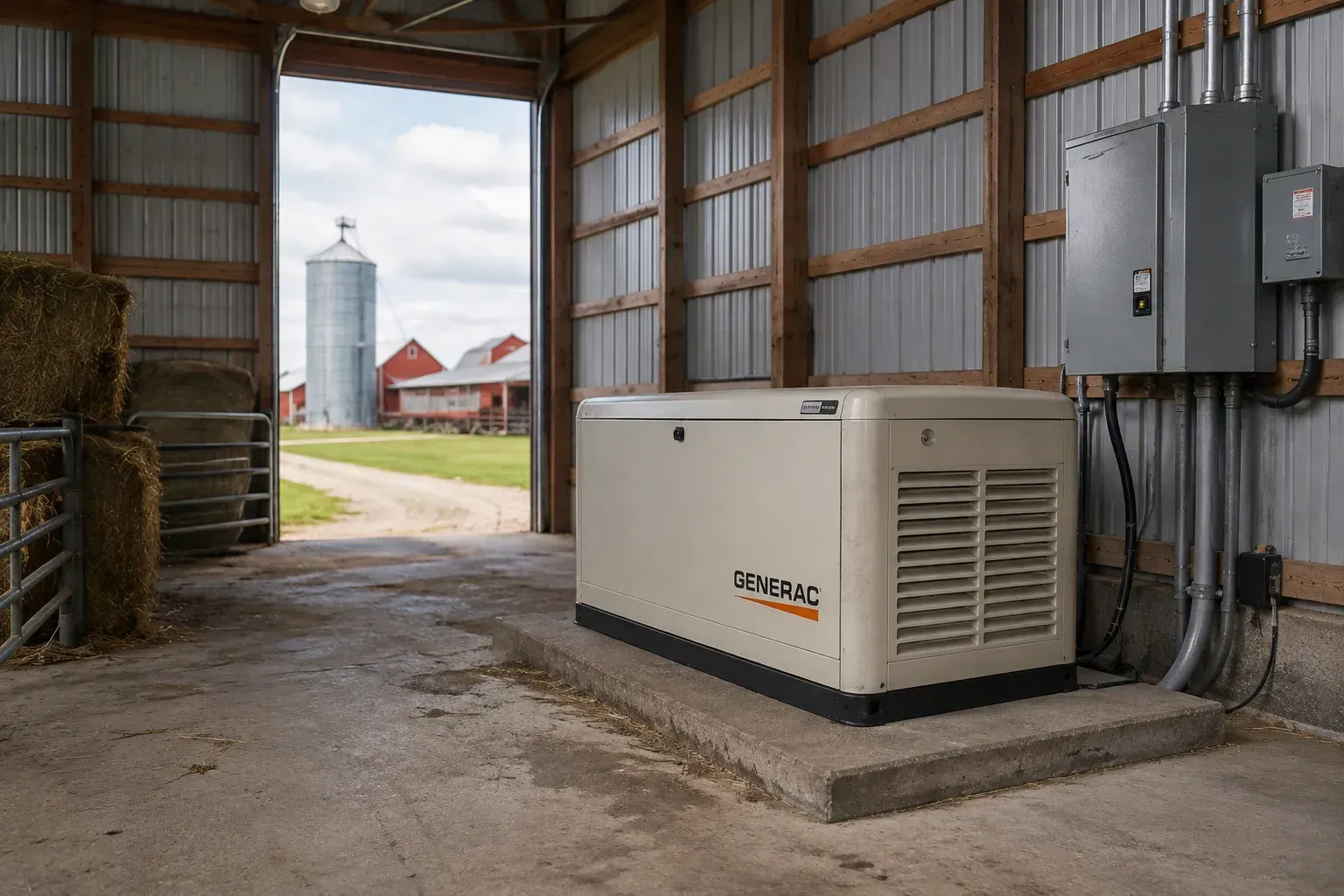
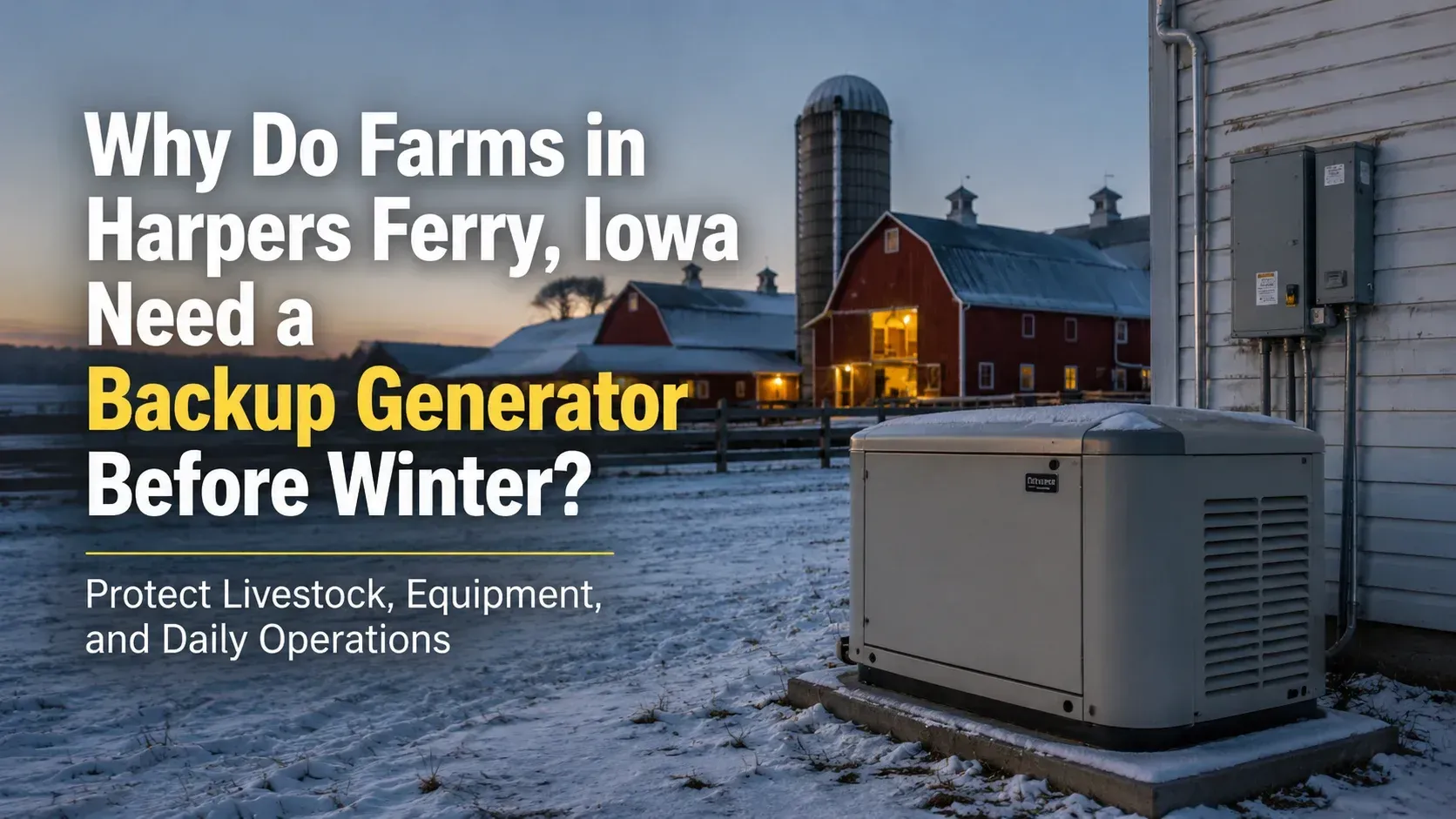
A standby unit is permanently installed and wired to the farm's electrical system through a transfer switch. When the power drops, it starts automatically, usually within seconds, whether anyone is home or not. Most run on propane, natural gas, or diesel.
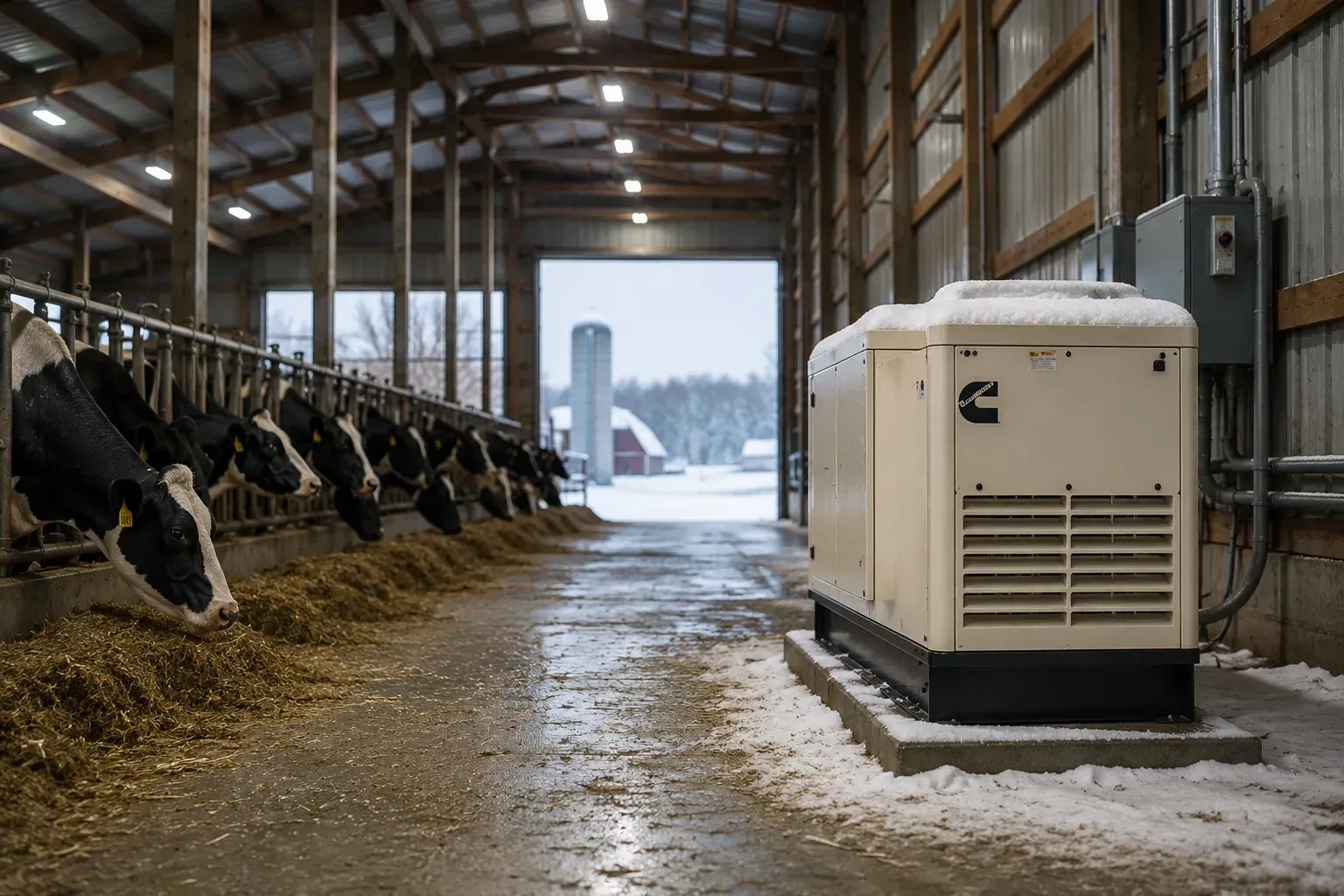
For livestock operations, automatic startup is the main advantage. Outages do not wait for convenient timing, and a barn full of animals cannot wait for someone to drive back from town. The trade-off is cost. Standby systems require professional installation and a larger upfront investment. Reviewing typical generator cost ranges ahead of time helps set a realistic budget.
Portable Generators
Portable units cost less and can move between buildings, which suits smaller operations or farms with limited critical loads. The limitations are significant, though. Someone must be present to start the unit, connect it safely, and refuel it. In an ice storm at 2 a.m., that is a real constraint.
Portable generators also carry safety risks when used incorrectly. They must never run indoors or connect to a panel without a proper transfer switch, since backfeeding can injure utility workers on the lines.
Factors to Consider Before Choosing a Generator
There is no single right answer for every farm. These are the questions worth working through:
Total electrical load. Add up the wattage of everything that must run during an outage: fans, pumps, heaters, milking equipment, and household basics. Motors draw extra power at startup, so surge capacity matters as much as running capacity.
Fuel type and availability. Propane stores well through winter and does not degrade. Diesel is common on farms already but can gel in extreme cold without treatment. Consider what you can reliably keep on hand during a multi-day storm.
Which buildings need coverage. Some farms back up everything. Others cover only the livestock barn and the well pump. Deciding this early keeps the system size, and the price, grounded in actual need.
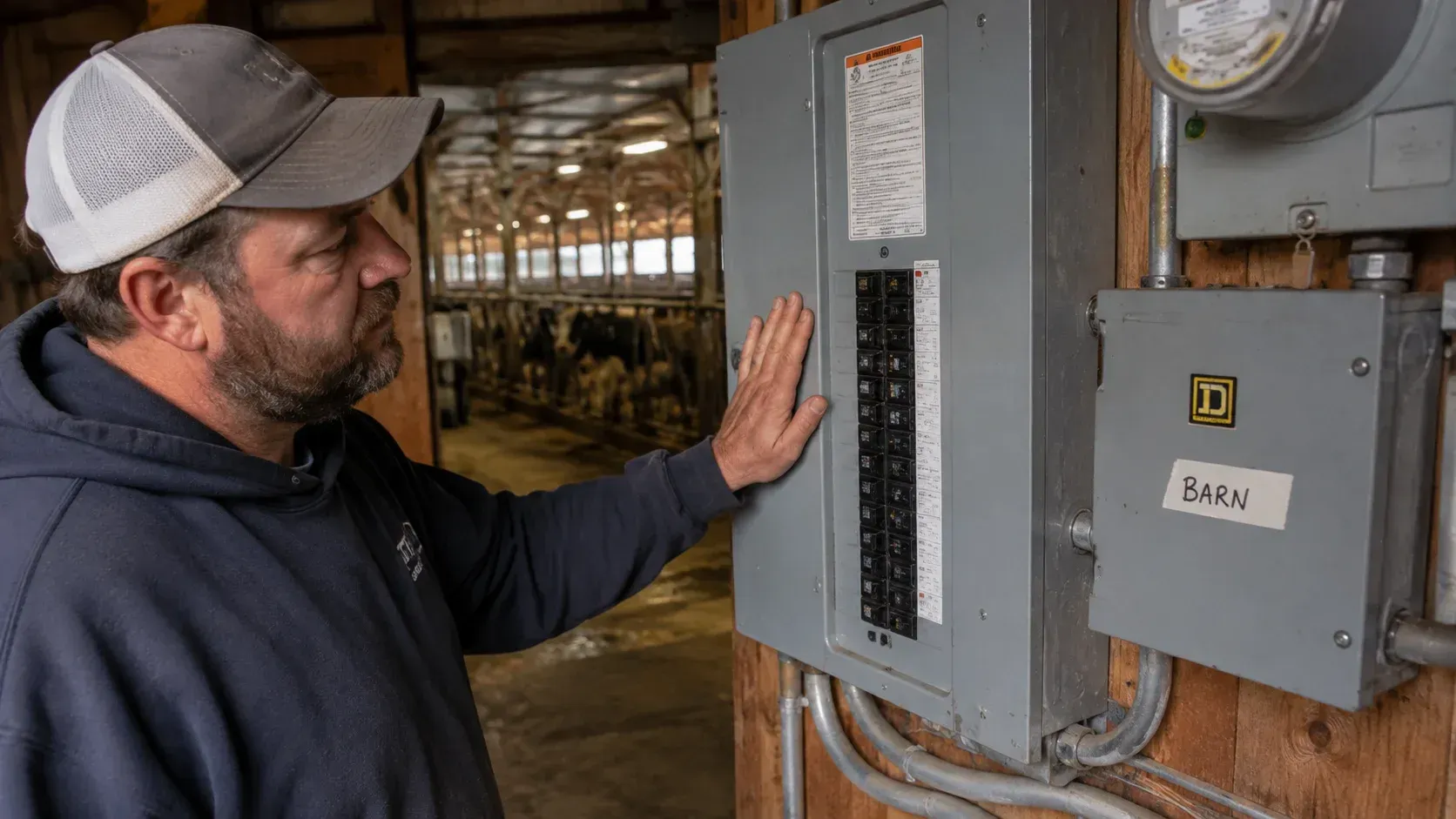
Transfer switch and wiring condition. Older farm wiring may need updates before a generator can be safely integrated. An electrician can evaluate the panel and identify any issues during the planning stage.
Maintenance requirements. Generators need regular exercise runs, oil changes, and battery checks. A unit that sits untested all year may not start when it finally matters.
Why Timing Matters: Preparing Before the First Storm
Winter power outage preparedness for farms works best when it starts in fall. Once the first major storm hits Northeast Iowa, demand for equipment and installation rises quickly, and lead times stretch.
Installing before winter also allows proper load testing in mild conditions. Discovering a wiring problem or an undersized unit during an actual outage defeats the purpose. Early planning leaves room to correct issues, train family members or employees on the system, and stock fuel.
Anyone searching for a backup generator Iowa farms can depend on should also factor in permitting and utility coordination, which take time regardless of season.
Conclusion
Winter outages in Harpers Ferry are not rare events. Ice, snow, and wind take down rural lines most years, and farms carry more risk than the average household because animals, water systems, and heating cannot wait for restoration. A backup generator keeps ventilation, water, heat, and milking equipment running through the gap.
The right system depends on the farm's total load, fuel access, and which buildings truly need coverage. Standby units offer automatic protection, while portable units cost less but demand hands-on operation. Whatever direction a farm takes, the decision deserves accurate load calculations and honest planning rather than a rushed purchase after the lights go out. Preparing before the season starts is the most reliable path to a manageable winter.
Not Sure What Size Generator Your Farm Needs?
Every operation carries a different electrical load, and sizing a system correctly takes more than a guess. If you are weighing backup power options for your farm, home, or shop in Harpers Ferry or the surrounding Tri-State area, feel free to
contact us with your questions. A short conversation about your setup can bring a lot of clarity, with no pressure and no obligation, so you can make the decision that fits your operation.
Frequently Asked Questions
How long do winter power outages usually last in rural Northeast Iowa?
Most outages last a few hours, but ice storms can leave rural properties without power for one to three days or longer. Farms at the end of long distribution lines often wait longer for restoration than homes in town.
What size backup generator does a typical farm need?
It depends on total electrical load. A small hobby farm may manage with 10 to 15 kW, while dairy or confinement livestock operations often need 30 kW or more. A load calculation of all essential equipment is the only accurate way to size a unit.
Can a portable generator power a livestock barn?
It can power limited loads if connected through a proper transfer switch, but portable units require someone on site to start, connect, and refuel them. Barns with continuous ventilation needs are usually better matched with an automatic standby system.
What fuel is best for a farm generator in winter?
Propane stores indefinitely and performs well in cold weather, which makes it a common choice in Iowa. Diesel works too, though it needs winter treatment to prevent gelling in extreme cold. The best option often depends on what fuel the farm already stores.
Do backup generators require maintenance?
Yes. Generators need periodic test runs, oil and filter changes, and battery checks. Many standby units run automatic weekly self-tests, but an annual professional inspection is still a reasonable practice before winter.
Is a transfer switch really necessary?
Yes. A transfer switch safely separates the generator from the utility grid. Connecting a generator directly to a panel without one can backfeed the lines, which is dangerous for utility workers and is prohibited by electrical code.
When is the best time to install a backup generator?
Late summer through fall is ideal. Installation before the first storm allows time for permits, wiring updates, load testing, and learning the system while conditions are still mild.
Related Posts