Generator Installation Guide: What Farm Owners Need to Know Before Getting Started
CONTACT US
Table of Contents
- Introduction
- Why Generator Installation Is Critical for Farms
- Types of Generators Used in Agricultural Settings
- Portable Units for Limited Loads
- Standby Systems for Full Farm Operations
- Load Assessment for Agricultural Equipment
- Understanding Transfer Switches and Electrical Integration
- Permits and Compliance in Harpers Ferry, IA
- Proper Placement in Farm Environments
- Fuel Considerations for Agricultural Properties
- Safety Risks Specific to Farms
- What the Installation Process Typically Involves
- Ongoing Maintenance and Operational Planning
- Conclusion
- Book a Farm Generator Installation Consultation
- Frequently Asked Questions
Key Takeaways
- Generator installation on farms requires detailed load assessment for agricultural equipment and livestock systems.
- Whole house generator installation may not address high-demand farm operations without proper scaling.
- Backup generator installation must comply with electrical codes and local permitting requirements.
- Proper placement is critical to reduce fire risk and carbon monoxide exposure in agricultural environments.
- Maintenance planning is essential to ensure system readiness during outages.
Introduction
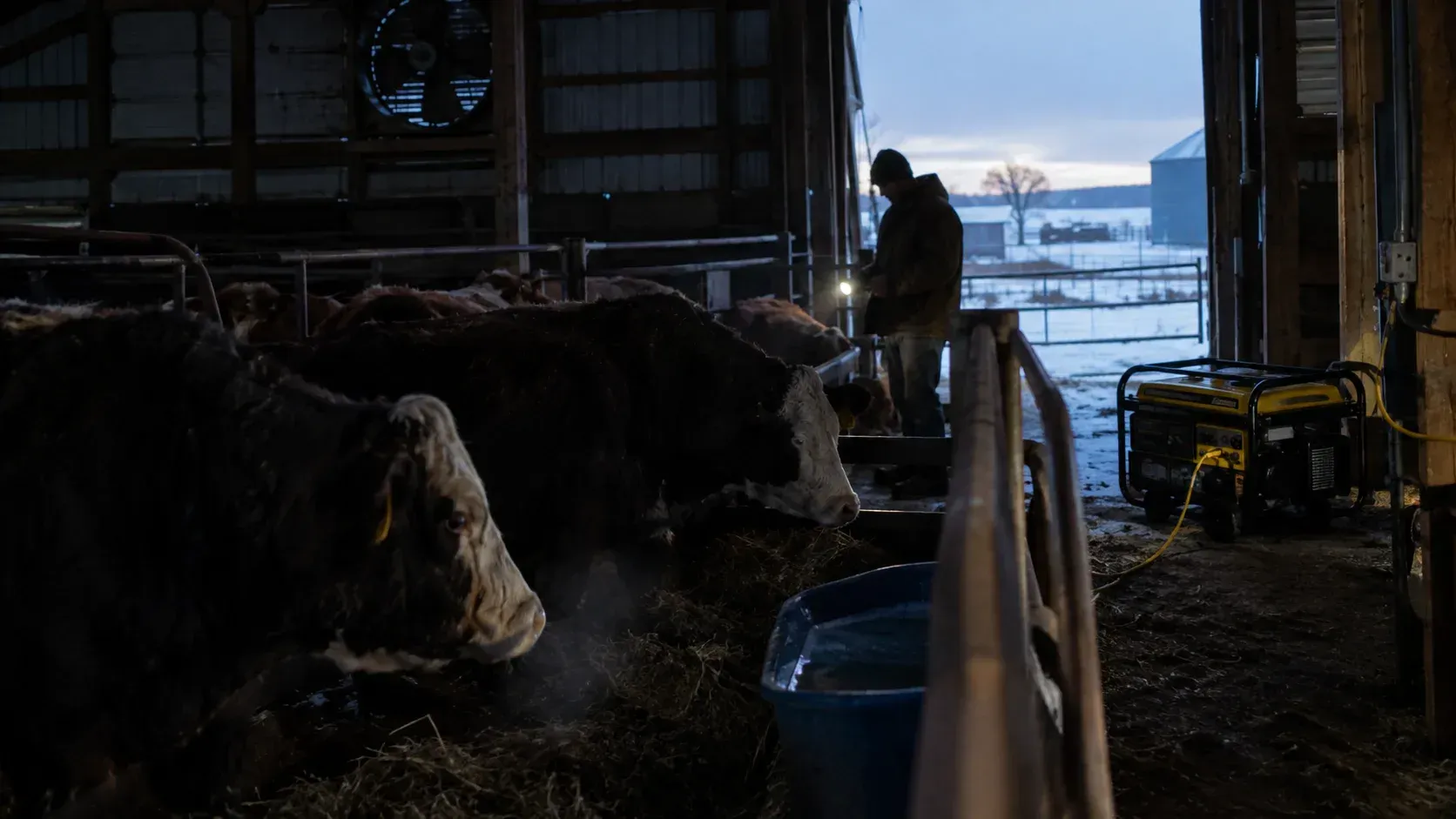
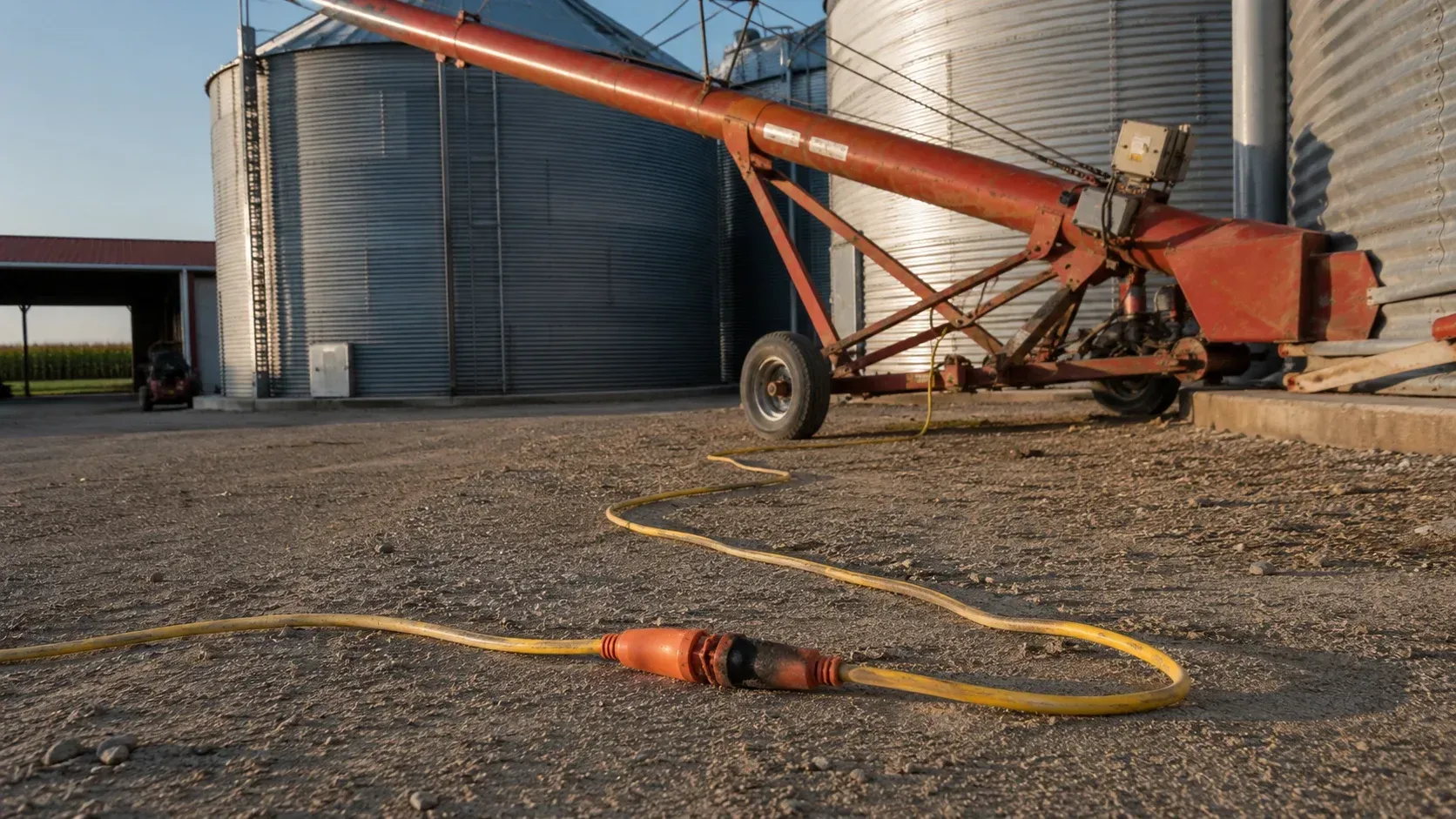
Generator installation for farms involves evaluating electrical loads, selecting equipment capable of supporting agricultural operations, securing permits, and integrating the system safely into existing farm infrastructure. For farm owners in Harpers Ferry, IA, reliable backup power can support livestock systems, grain handling equipment, irrigation, refrigeration, and essential facility lighting during outages.
Agricultural properties often have higher and more complex electrical demands than residential homes. Power disruptions can affect feeding systems, ventilation fans, well pumps, and temperature-controlled storage. Understanding the technical, regulatory, and safety aspects of generator installation allows us to plan responsibly and align equipment with operational needs.
This guide explains what farm owners should evaluate before starting the installation process.
Why Generator Installation Is Critical for Farms
Unlike residential properties, farms rely on electricity for time-sensitive and operationally critical systems.
Common farm power needs include:
- Livestock ventilation and heating
- Milking equipment
- Irrigation systems
- Grain dryers
- Refrigeration units
- Well pumps
- Security systems
An extended outage can disrupt these operations. While not every system requires continuous backup, identifying essential loads helps define installation scope.
Generator installation in agricultural settings is typically more technical due to three-phase systems, larger service panels, and specialized equipment.
Types of Generators Used in Agricultural Settings
Portable Units for Limited Loads
Portable generators may support smaller farm tasks such as:
- Basic lighting
- Small tools
- Temporary pump operation
However, they generally lack the output capacity required for high-demand agricultural equipment. Manual operation is also required during outages.
Portable units may be appropriate for targeted applications but are not typically sufficient for full farm continuity.
Standby Systems for Full Farm Operations
Standby generators are permanently installed and are often used in large-scale backup generator installation projects for farms.
These systems:
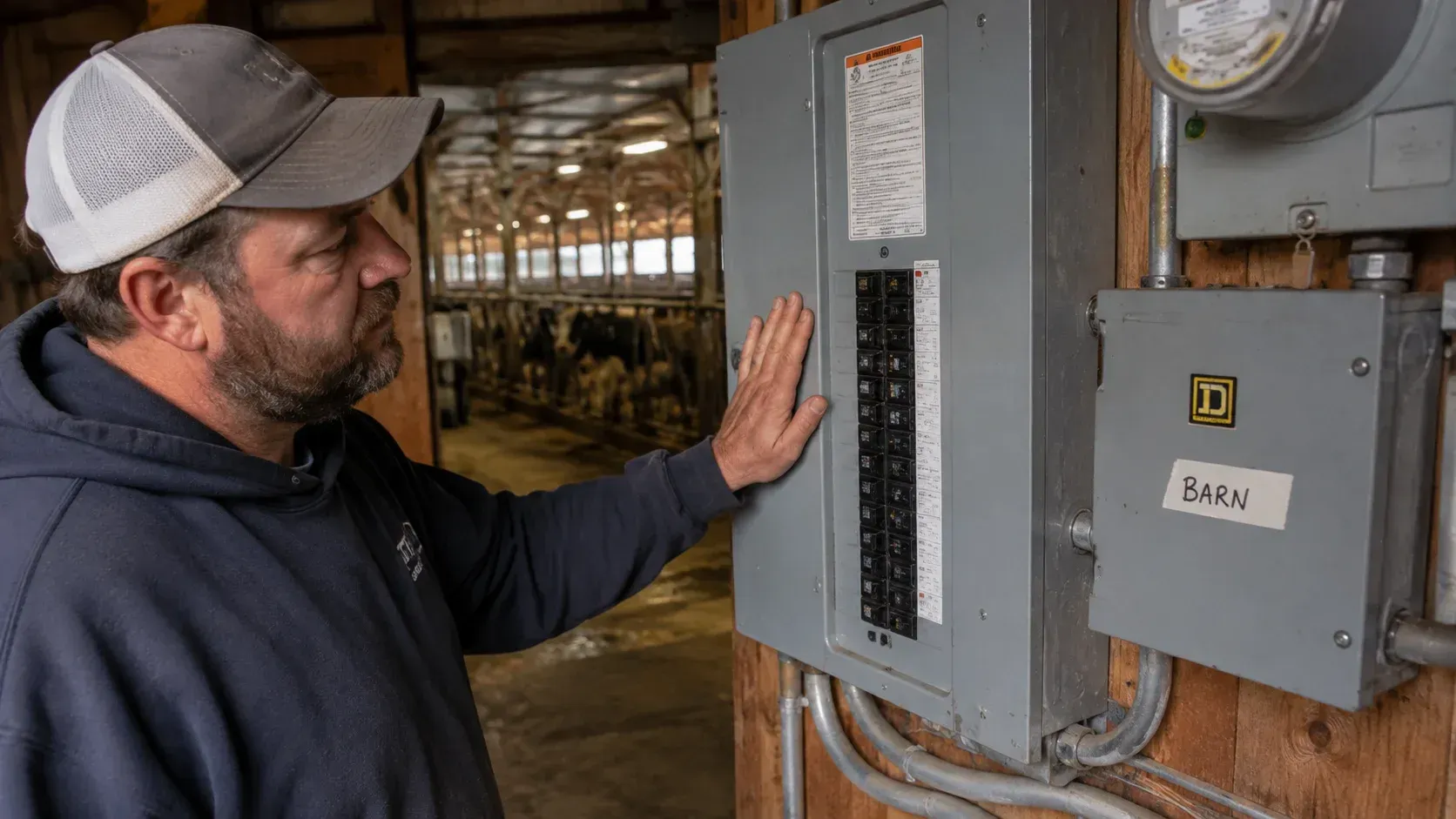
- Connect directly to farm electrical panels
- Operate automatically during outages
- Support larger electrical loads
- Can be configured for single-phase or three-phase service
In some cases, whole house generator installation terminology may apply to farm residences, but operational buildings often require separate or higher-capacity systems.
Load Assessment for Agricultural Equipment
Proper load assessment is the foundation of generator installation on farms.
We typically evaluate:
- Starting and running wattage of motors
- Ventilation fan loads
- Heating systems
- Refrigeration compressors
- Grain dryer demands
- Water pump requirements
Motor-driven equipment has high startup amperage. Failing to account for this can result in undersized systems that cannot manage peak demand. Load calculations must also consider simultaneous equipment operation. Farms operating multiple systems at once require careful planning to avoid overload conditions.
Understanding Transfer Switches and Electrical Integration
Transfer switches isolate the generator from the utility grid. This prevents backfeeding and ensures safe electrical flow.
For farms, integration may involve:
- Manual transfer switches for limited circuits
- Automatic transfer switches for continuous operation
- Load management modules
- Subpanel configurations
Three-phase systems require additional evaluation to ensure voltage balance and compatibility.
Electrical integration must comply with the National Electrical Code and local agricultural standards. Because farm systems can involve higher amperage services, installation requires technical expertise.
Permits and Compliance in Harpers Ferry, IA
Generator installation in Harpers Ferry, IA, typically requires:
- Electrical permits
- Inspection approvals
- Compliance with setback requirements
- Fuel storage regulation adherence
Agricultural properties may have additional considerations related to fuel tanks or detached buildings.
Permitting ensures that wiring, grounding, and fuel systems meet safety standards. Skipping regulatory steps can lead to operational risks or future compliance issues.
Before installation begins, it is important to confirm current county and state requirements.
Proper Placement in Farm Environments
Placement on a farm differs from residential settings due to barns, fuel storage, dust exposure, and livestock proximity.
Key placement factors include:
- Clearance from barns and feed storage
- Protection from dust and debris
- Elevation above flood-prone areas
- Adequate ventilation
- Safe distance from animal housing
Generators must always be installed outdoors. Exhaust gases contain carbon monoxide, which can accumulate in enclosed spaces.
In agricultural settings, fire separation and equipment accessibility should also be considered.
Fuel Considerations for Agricultural Properties
Farms often use:
- Diesel
- Propane
- Natural gas (where available)
Fuel type affects runtime, storage requirements, and refueling logistics.
Diesel generators are common in agricultural settings due to fuel availability and torque capacity for large equipment loads. However, fuel storage must comply with environmental regulations.
Runtime planning should account for extended outages, especially during severe weather or harvest season.
Safety Risks Specific to Farms
Farms present unique safety considerations:
- Flammable materials (hay, grain dust)
- Livestock sensitivity to fumes
- Large motor loads
- Outdoor environmental exposure
Generator installation must include:
- Proper grounding
- Surge protection
- Clear exhaust routing
- Overcurrent protection
Understanding these risks allows us to implement safeguards that reduce potential hazards.
What the Installation Process Typically Involves
A farm-based generator installation may include:
- On-site electrical evaluation
- Load calculation and system design
- Equipment selection
- Permit submission
- Site preparation
- Fuel system setup
- Transfer switch installation
- Electrical integration and testing
- Final inspection
Because farm systems vary significantly, installation timelines depend on equipment complexity and regulatory approval.
Ongoing Maintenance and Operational Planning
Generator systems require consistent maintenance to remain operational.
Maintenance tasks may include:
- Oil and filter replacement
- Battery testing
- Fuel system inspection
- Load testing
- Electrical connection review
Farms with critical livestock operations may benefit from scheduled maintenance planning to reduce downtime risk.
Maintenance intervals should align with manufacturer guidelines and usage levels.
Conclusion
Generator installation for farms involves more than selecting a unit. It requires accurate load assessment, electrical code compliance, proper fuel planning, safe placement, and long-term maintenance considerations.
For agricultural operations in Harpers Ferry, IA, backup power planning supports operational continuity during outages. By understanding system requirements and regulatory responsibilities, we can make informed decisions that align with farm infrastructure and safety standards.
Careful planning ensures the system is appropriately integrated into existing agricultural operations.
Book a Farm Generator Installation Consultation
If you are evaluating generator installation for your farm in Harpers Ferry, IA, we can provide clear technical guidance tailored to agricultural electrical systems.
At Whit's Electric LLC, we focus on code-compliant integration for backup generator installation where applicable to farm residences. Send us an email at wexford1332@gmail.com or call us at (563) 419-8218 to discuss options.
We are available to discuss your farm’s electrical layout and backup power considerations.
Frequently Asked Questions
Do farms require different generator sizing than residential homes?
Yes. Farms typically have higher electrical loads, including motor-driven equipment and three-phase systems, which require detailed load calculations.
Can one generator power both the farmhouse and operational buildings?
It depends on total load demand. In some cases, separate systems or load management solutions are more appropriate.
Are permits required for generator installation on agricultural properties?
Most permanent installations require permits and inspection, even on rural properties.
What fuel type is most common for farm generators?
Diesel and propane are common due to on-site storage capabilities, but availability and operational needs influence the decision.
How often should farm generators be maintained?
Maintenance frequency depends on usage and manufacturer guidelines, but regular inspection and testing are recommended to ensure readiness.
Related Posts