How Does Agricultural Ventilation Equipment Improve Livestock Health in Northeast Iowa?
CONTACT US
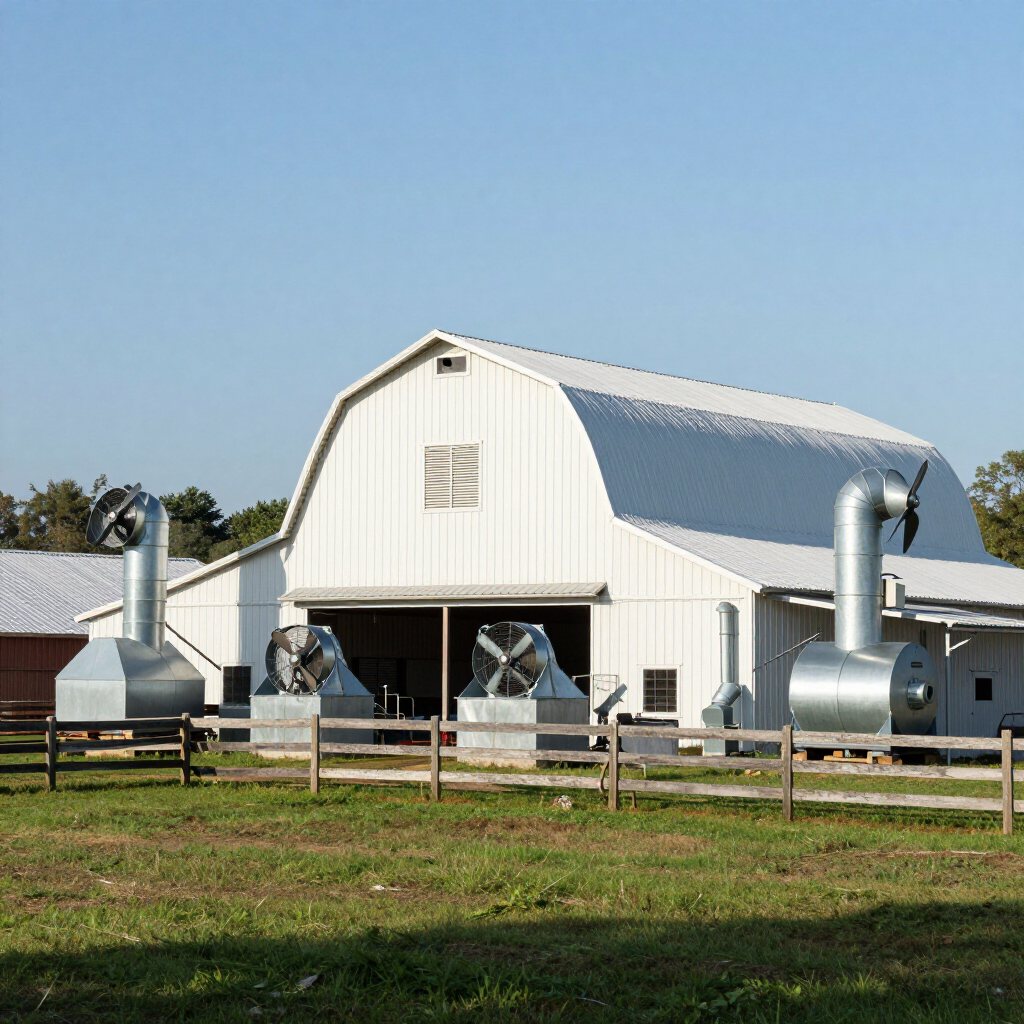
Table of Contents
- Why Ventilation Matters in a Barn
- How Heat Stress Affects Livestock
- Common Types of Ventilation Equipment
- Natural Versus Mechanical Ventilation
- Designing a System for Northeast Iowa's Climate
- Maintenance and Seasonal Adjustments
- Working With a Qualified Installer
- Conclusion
- Book a Ventilation System Assessment
- Frequently Asked Questions
Key Takeaways
- Ventilation systems help control temperature, humidity, and air quality inside barns.
- Proper airflow reduces heat stress in cattle and supports daily productivity.
- Common equipment includes circulation fans, exhaust fans, curtain systems, and inlets.
- Equipment selection depends on barn type, herd size, and Iowa's climate patterns.
- Routine maintenance keeps systems running through summer heat and winter cold.
Introduction
Agricultural ventilation equipment improves livestock health in northeast Iowa by controlling temperature, removing moisture, reducing airborne contaminants, and providing consistent airflow. Well-designed systems help keep cattle and other livestock comfortable through summer humidity and cold winter conditions.
Air quality and temperature directly affect animal welfare and farm productivity. Heat stress can lower feed intake and milk production, while poor air movement can raise the risk of respiratory issues. For dairy and beef operations across the region, choosing the right agricultural ventilation equipment in Northeast Iowa is a practical step toward stable herd performance.
Why Ventilation Matters in a Barn
Barns hold many animals in a relatively small space. Without proper ventilation, heat, moisture, ammonia, dust, and carbon dioxide can build up quickly. These conditions affect both animal health and worker comfort.
A well-ventilated barn supports several outcomes:
- Steady indoor temperatures
- Lower humidity levels
- Reduced airborne pathogens
- Drier bedding
- Better air for both animals and people
Effective ventilation is not just about cooling. It is about maintaining stable air conditions year-round.
How Heat Stress Affects Livestock
Heat stress is one of the biggest summer challenges for livestock producers. Cattle in particular are sensitive to elevated temperatures combined with high humidity, which is common in Iowa summers.
When animals experience heat stress, several things may happen:
- Feed intake drops
- Water consumption rises
- Milk production declines in dairy cows
- Breeding performance may decrease
- Animals stand more and lie down less
Livestock cooling systems, including fans and water-based cooling, help reduce heat load and support normal feeding and resting behavior. Combined with proper ventilation, they help maintain consistent conditions during heat waves.
Common Types of Ventilation Equipment
A complete ventilation setup usually includes several types of equipment working together. Common components include:
Circulation Fans
These move air across animals to support cooling through evaporation and air movement.
Exhaust Fans
These pull stale air out of the barn, often through endwalls or sidewalls.
Curtain Systems
Curtains open and close to adjust natural airflow based on outside temperatures.
Inlets and Baffles
These direct fresh air into the barn at the right speed and angle.
Variable Speed Controls and Thermostats
These automate fan operation based on temperature and reduce manual oversight.
The combination of these parts depends on the type of barn, the species housed, and the climate.
Natural Versus Mechanical Ventilation
There are two general approaches to barn ventilation: natural and mechanical.
Natural Ventilation
This approach uses wind and temperature differences to move air through the barn. It relies on open sidewalls, ridge vents, and curtain systems. Natural systems work well in barns designed with proper orientation and openings.
Mechanical Ventilation
Mechanical systems use powered fans to move air. This approach gives more control over airflow rates and is useful when natural ventilation is not enough, especially in tunnel-ventilated barns or during low-wind conditions.
Many farms use hybrid systems that combine both approaches. The right setup depends on barn design and herd needs.
Designing a System for Northeast Iowa's Climate
Northeast Iowa experiences a wide range of weather, from hot, humid summers to cold winters with snow and ice. Ventilation systems must work across all of these conditions.
Important design factors include:
- Summer airflow rates for heat stress reduction
- Winter ventilation rates that remove moisture without overcooling
- Equipment rated for cold-weather starts
- Controls that adjust automatically through the seasons
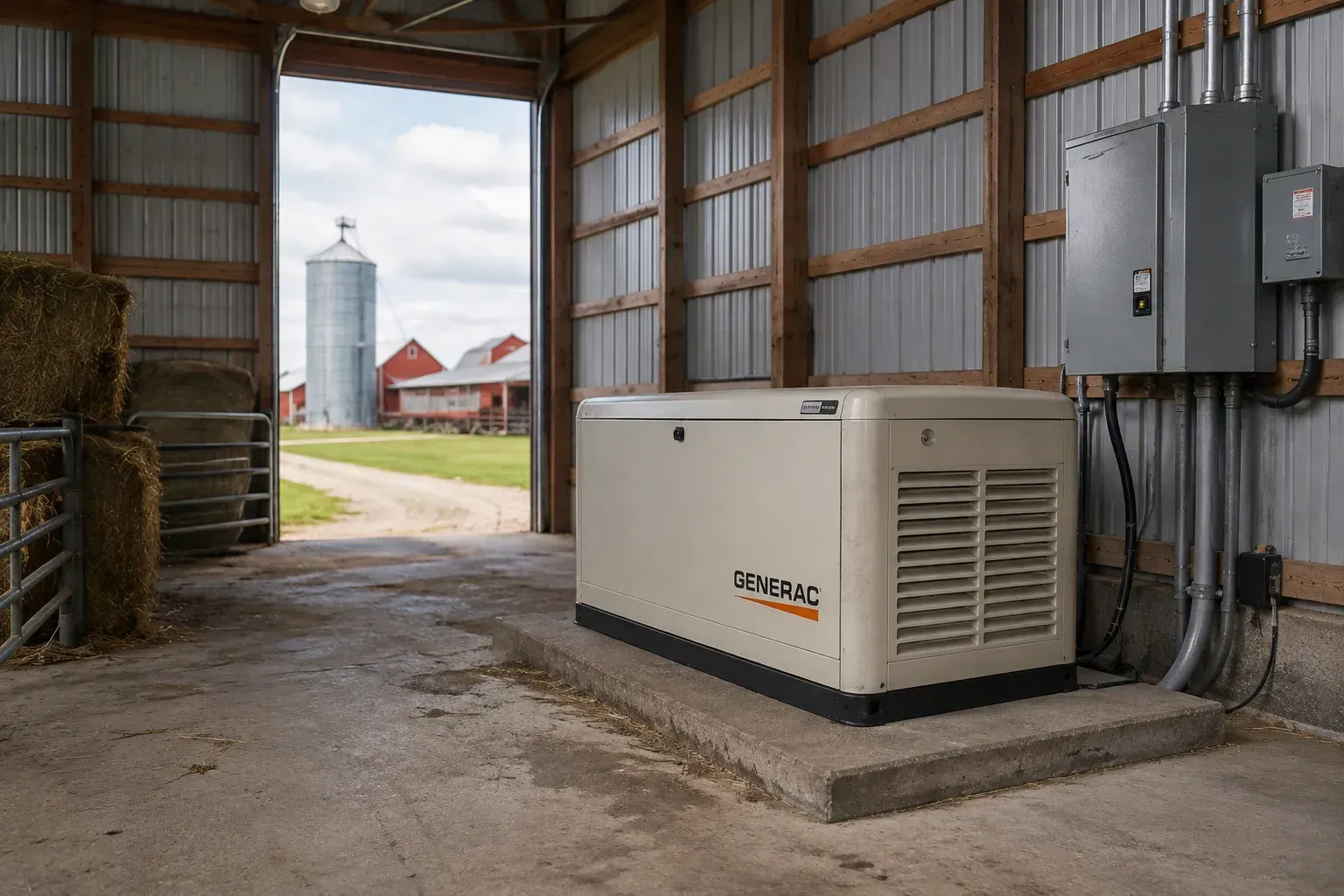
- Backup power options to maintain ventilation during outages
A system designed only for summer cooling may fail to manage winter moisture, leading to wet bedding and respiratory issues. Year-round planning is essential.
Maintenance and Seasonal Adjustments
Ventilation equipment requires regular maintenance to perform well. Common tasks include:
- Cleaning fan blades and guards
- Lubricating motors and bearings
- Checking belts and pulleys
- Inspecting curtain ropes and motors
- Testing thermostats and controls
- Verifying inlet operation
Most farms perform a thorough maintenance check before summer and again before winter. This helps catch worn parts before they fail during peak demand.
Dairy barn ventilation systems in particular benefit from consistent maintenance because cows are present 24 hours a day and depend on continuous airflow.
Working With a Qualified Installer
Ventilation system design involves both electrical work and an understanding of livestock housing. A qualified installer can help with:
- Assessing your barn's current airflow
- Calculating required fan capacity
- Selecting equipment from established manufacturers
- Wiring fans and controls to code
- Setting up automated controls
- Providing maintenance guidance
Working with a local electrical contractor experienced in agricultural projects helps ensure the system meets both safety standards and the practical needs of your operation.
Conclusion
Agricultural ventilation equipment plays a central role in livestock health and productivity in northeast Iowa. By controlling temperature, humidity, and air quality, well-designed systems support animal comfort throughout Iowa's varied weather.
Understanding equipment types, the difference between natural and mechanical approaches, and the importance of regular maintenance helps farmers plan systems that match their barns and their herds. Informed planning leads to better outcomes for both animals and operations.
Book a Generator Installation
If you are reviewing your barn's ventilation or planning an upgrade in northeast Iowa, an on-site assessment can clarify your options. A qualified local installer can walk through your current setup, identify gaps, and explain equipment choices in plain terms.
Whit's Electric LLC provides generac generator maintenance support and related electrical services in Harpers Ferry, IA and surrounding areas. Contact us via email at wexford1332@gmail.com or call (563) 419-8218 for consultation and advice.
Frequently Asked Questions
How often should we service our dairy barn ventilation system?
We recommend full service checks twice a year, ideally before summer and winter. Simple tasks like fan cleaning may be done more often during heavy-use seasons to maintain airflow.
Can livestock cooling systems run during a power outage?
Only if connected to backup power. Many farms in the region pair ventilation systems with standby generators so airflow continues during outages, which is important during summer heat events.
Is agricultural ventilation equipment in Northeast Iowa different from other regions?
The equipment is similar, but design choices reflect local climate. Cold-rated motors, winter moisture control, and storm-resistant components are common considerations for farms in the area.
How do we know if our current barn ventilation is sufficient?
Signs include condensation on surfaces, strong ammonia smells, animals panting heavily, or wet bedding. A professional airflow assessment can confirm whether upgrades are needed.
Do small farms need mechanical ventilation, or is natural enough?
Smaller barns with good design often manage with natural ventilation. Larger barns, tunnel barns, or operations in dense layouts usually benefit from mechanical systems for consistent airflow.
Related Posts