Could Your Farm's Electrical System Be Working Harder Than It Should in Harper Ferry?
CONTACT US
Table of Contents
- Introduction
- Signs Your Farm Electrical System Is Overworked
- Why Modern Farm Equipment Demands More Power
- What an Overloaded System Actually Costs You
- How a Farm Electrical Inspection Works
- Common Upgrades for Growing Operations
- When to Call a Licensed Electrician
- Conclusion
- Are Your Breakers Tripping More Than They Used To?
- Frequently Asked Questions
Key Takeaways
- A farm electrical system can absolutely work harder than it should — in Harpers Ferry it happens more often than most owners realize, usually because farms keep adding modern, power-hungry equipment onto systems sized for a much lighter load.
- If your breakers trip on a schedule, your lights dim when a big motor kicks on, or your panel feels warm to the touch, those are signs the system is straining.
- That strain affects safety, energy use, and whether your equipment runs when you need it.
- Professional agricultural electrical services regularly find farms running well past what their original wiring was meant to carry.
Introduction
Yes, a farm electrical system can absolutely work harder than it should, and in Harpers Ferry it happens more often than most owners realize. The usual cause is simple: farms keep adding modern, power-hungry equipment onto electrical systems that were sized for a much lighter load years ago.
If your breakers trip on a schedule, your lights dim when a big motor kicks on, or your panel feels warm to the touch, those are signs the system is straining. For farms across Allamakee County, that strain is worth paying attention to, because it affects safety, energy use, and whether your equipment runs when you need it. Professional agricultural electrical services regularly find farms running well past what their original wiring was meant to carry.
Signs Your Farm Electrical System Is Overworked
An overworked system usually gives you warning before it fails. The trick is knowing what to watch for.
Breakers That Trip Repeatedly. A breaker trips to protect the circuit from too much current. If the same breaker trips again and again, that circuit is carrying more load than it was designed for. It is doing its job, but it is also telling you something.
Dimming or Flickering Lights. When lights dim as a fan, auger, or compressor starts up, the system is struggling to supply the surge that motor needs. Occasional flicker on a large motor can be normal, but constant dimming points to strain or undersized wiring.
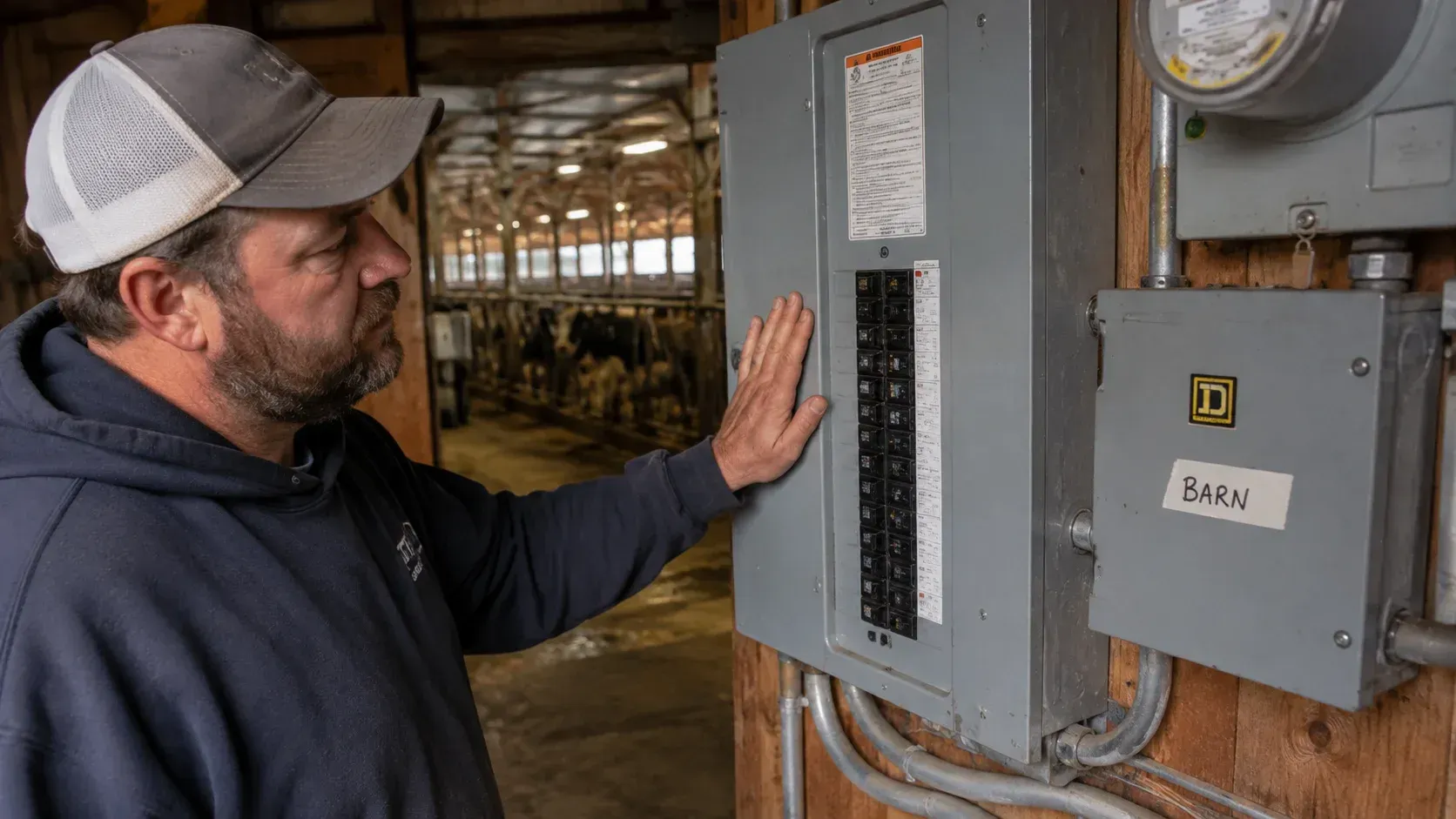
Warm Panels, Outlets, or Switches. Electrical connections should not feel warm. Heat at a panel, outlet, or switch usually means a loose or overloaded connection, and heat is the leading precursor to electrical fires.
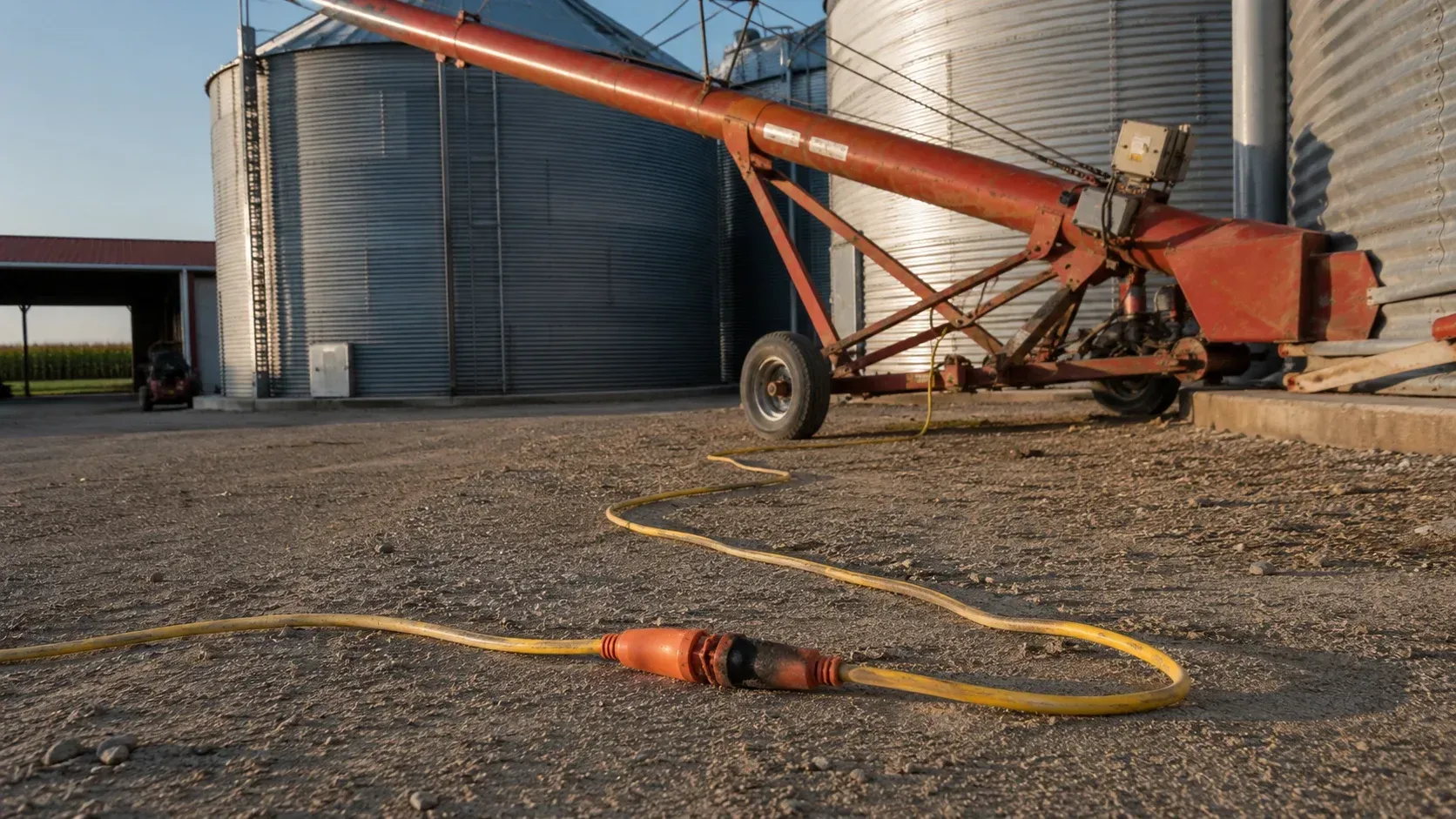
Relying on Extension Cords and Adapters. When outlets are permanently full and extension cords run across the shop and barn, the system has run out of the capacity it was built with. That is a workaround, not a solution, and it adds risk.
Why Modern Farm Equipment Demands More Power
Farms in Northeast Iowa look very different electrically than they did 30 or 40 years ago. The wiring often has not kept up.
Grain dryers, larger ventilation fans, automated feed systems, heated waterers, welders, and shop tools all pull serious current. A panel installed for lighting and a few outlets was never meant to run a modern confinement building or a full workshop.
Electric motors are the biggest factor. They draw a large surge of current at startup — several times their running load — and that surge is what strains older wiring and undersized panels the most. Add a few motors on one circuit and the demand climbs fast.
Expansion compounds it. Every new building, waterer, or piece of equipment gets tied into a system that may already be near its limit. Reliable professional electrical services can tell you whether your current setup has room for what you are adding.
What an Overloaded System Actually Costs You
Strain on a farm electrical system is not only a safety issue. It works against your operation in ways that are easy to miss.
Wasted energy. Loose and corroded connections create resistance, and resistance turns electricity into heat instead of useful work. That heat is energy you paid for and did not use.
Equipment wear. Motors that run on low or unstable voltage work harder and wear out sooner. Consistent, adequate power is easier on the equipment you depend on.
Downtime. A tripped circuit during a cold snap or harvest push is not just inconvenient. It can interrupt ventilation, feeding, or drying at the worst possible time.
Fire risk. This is the one that matters most. Overloaded circuits and overheated connections are a common cause of barn and farm building fires, and those losses are rarely small.
How a Farm Electrical Inspection Works
A farm electrical inspection gives you an honest picture of what your system can handle and where it is stretched. A licensed electrician typically reviews several areas.
The service and panel come first. The electrician checks the main service size, looks for corrosion and overheating, and confirms whether the panel has the capacity for your current and planned loads. Many older farms run undersized services for what they now demand.
Circuits and wiring come next. This means identifying overloaded circuits, aging or damaged wiring, improper splices, and wiring methods that no longer meet code for agricultural buildings.
The inspection also covers grounding, equipment connections, and the condition of outdoor components like poles and feeders. In some cases, correcting capacity issues includes new electric pole installation to properly distribute power across the property.
You should come away with a written summary of what was found and what needs attention, so you can plan repairs on your own timeline.
Common Upgrades for Growing Operations
When an inspection shows a system running past its limits, a few upgrades come up often:
- Service or panel upgrades to add capacity for current and future equipment
- Dedicated circuits for large motors and high-draw equipment, so they are not competing on shared circuits
- Rewiring of aged or damaged sections, especially in older barns
- Improved grounding to protect equipment and reduce stray voltage in livestock areas
- Proper outdoor power distribution to buildings that have been added over the years
None of these need to happen all at once. A clear assessment lets you prioritize by safety and need instead of tackling everything blind.
When to Call a Licensed Electrician
Some situations call for a professional look sooner rather than later. Repeated breaker trips, warm panels, a burning smell, or visible wiring damage all warrant prompt attention.
It is also wise to schedule an assessment before a major addition, such as a new grain dryer, confinement building, or shop expansion. Knowing your capacity ahead of time prevents overloading a system that is already working hard.
Panel work, service upgrades, and load calculations involve real shock and fire hazards. These are not do-it-yourself jobs, and a licensed electrician has the training to evaluate and correct them safely.
Conclusion
A farm electrical system in Harpers Ferry can quietly end up carrying far more than it was built for, especially as operations add modern, high-draw equipment to decades-old wiring. The warning signs — tripping breakers, dimming lights, and warm panels — are the system's way of telling you it is under strain.
That strain touches safety, energy use, equipment life, and uptime all at once. A farm electrical inspection turns guesswork into a clear picture of what your system can handle and what it needs. From there, upgrades can be planned by priority rather than rushed after a failure. The steadiest path is to understand your system before it forces the issue.
Are Your Breakers Tripping More Than They Used To?
That pattern is usually the first clear sign a system is carrying too much. If your farm's electrical setup has you wondering whether it is keeping up with your equipment, feel free to contact us with your questions. A simple conversation about your buildings and what you are running can help you understand where things stand, with no pressure and no obligation.
Frequently Asked Questions
Common signs include breakers that trip repeatedly, lights that dim when equipment starts, warm outlets or panels, and heavy reliance on extension cords. Any of these suggests the system is carrying more load than it was designed for.
Grain dryers, large ventilation fans, automated feeders, and shop tools draw significant current, and electric motors pull an even larger surge at startup. Systems wired decades ago were rarely sized for these loads.
An inspection typically reviews the service size and panel, circuit loads, wiring condition, grounding, equipment connections, and outdoor power distribution. It usually ends with a written summary of findings and recommended repairs.
It can. Loose or corroded connections create resistance that turns electricity into wasted heat, and motors running on low voltage work harder. Both use energy that does not go toward useful work.
That depends on your system's current capacity. Adding high-draw equipment to a system already near its limit can overload circuits. An assessment before the addition helps confirm whether an upgrade is needed first.
Many farms benefit from a professional inspection every 3 to 5 years, and sooner if warning signs appear or before a major equipment addition. Older systems and heavy-use buildings often warrant more frequent checks.
Panel and service work involves serious shock and fire hazards and generally requires permits and a licensed electrician. For safety and code compliance, these upgrades should be left to a qualified professional.
Related Posts