What Should Iowa Farmers Know Before Installing a Standby Generator on Their Property?
CONTACT US
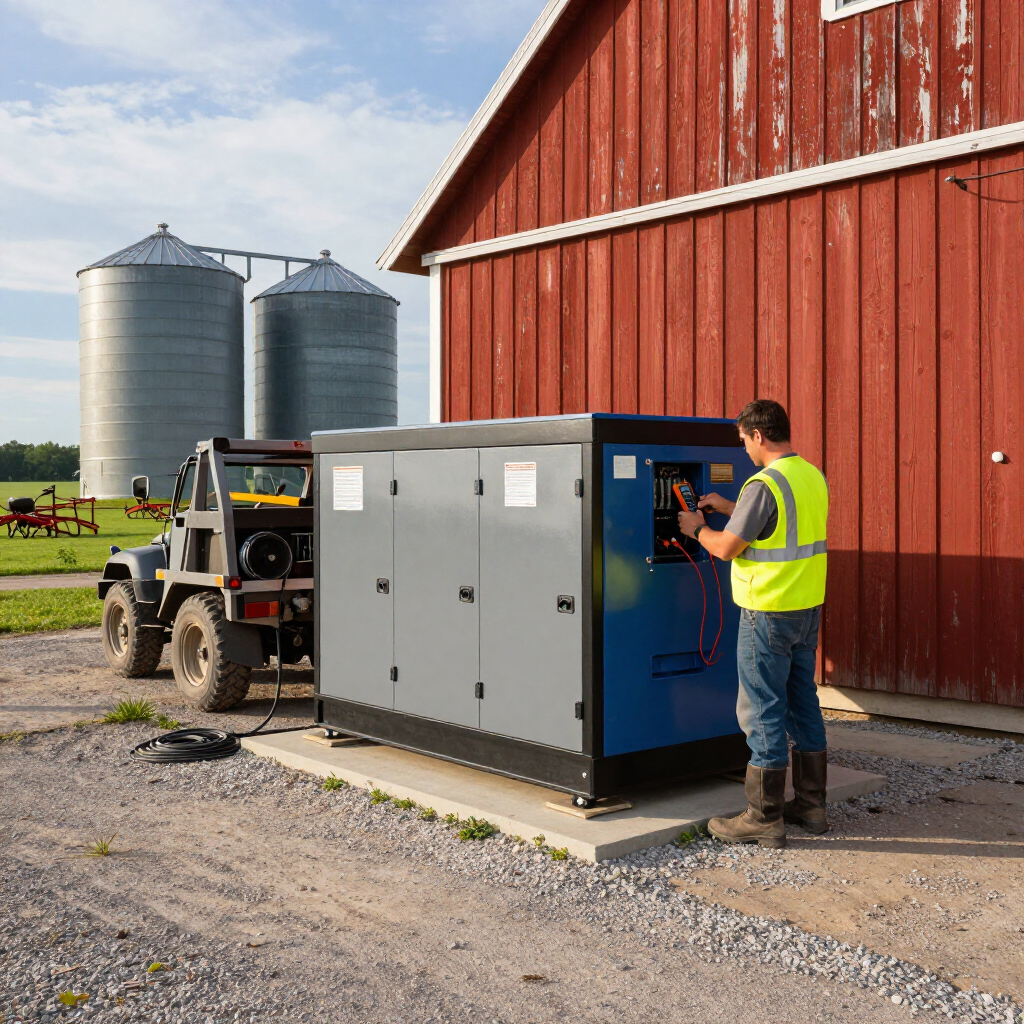
Table of Contents
- Why Standby Power Matters for Iowa Farms
- How to Size a Standby Generator for a Farm
- Choosing Between Natural Gas, Propane, and PTO Generators
- What the Installation Process Looks Like
- Permits, Codes, and Safety Considerations
- Long-Term Maintenance and Reliability
- Working With a Licensed Local Electrician
- Book a Generator Installation
- Frequently Asked Questions
Key Takeaways
- A standby generator provides automatic backup power during outages, which is critical for farms that rely on continuous electricity for livestock, grain bins, and milking equipment.
- Generator sizing depends on your farm's total electrical load, not just essential circuits.
- Fuel options usually include natural gas, propane, and tractor PTO units, each suited to different farm setups.
- Professional farm standby generator installation in Harpers Ferry, IA must follow local electrical codes and permitting requirements.
- Routine maintenance is essential for keeping a standby system reliable year after year.
Introduction
Before installing a standby generator on an Iowa farm, owners should understand the system's electrical load requirements, fuel options, sizing standards, and the local permitting process. A standby generator is a fixed backup power system that activates automatically when utility power fails, and choosing the right one involves more than picking the largest unit available.
For farm owners in northeast Iowa, reliable power is tied directly to daily operations. Dairy parlors, grain dryers, ventilation fans, and water systems all depend on consistent electricity. A well-planned farm standby generator installation in Harpers Ferry, IA can help reduce downtime and protect equipment and livestock during outages. This guide explains the key factors farmers should review before moving forward.
Why Standby Power Matters for Iowa Farms
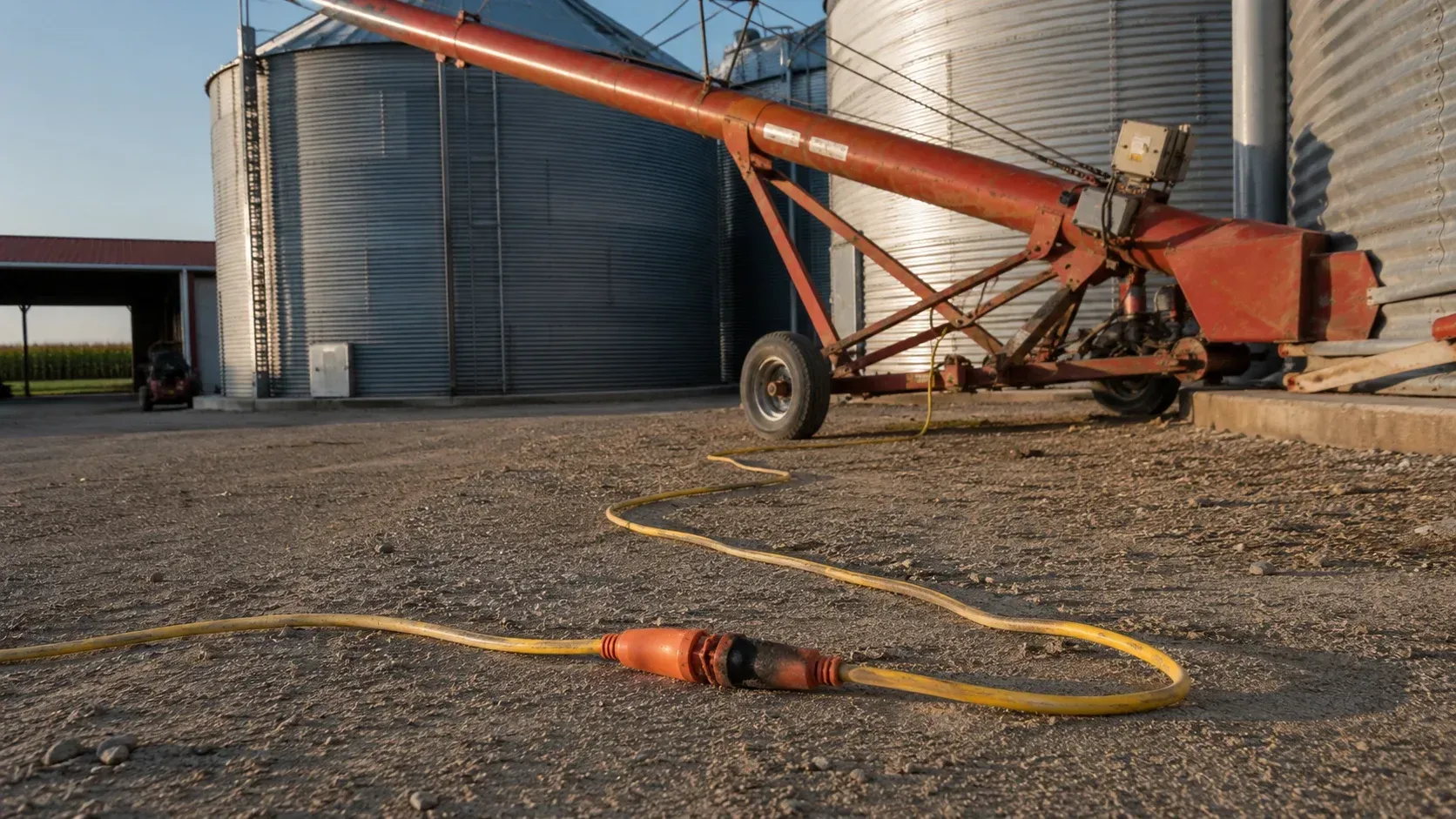
Power outages in rural Iowa can occur due to storms, ice, or grid issues. For a farm, even a short outage can affect feed systems, milking schedules, ventilation, and refrigeration.
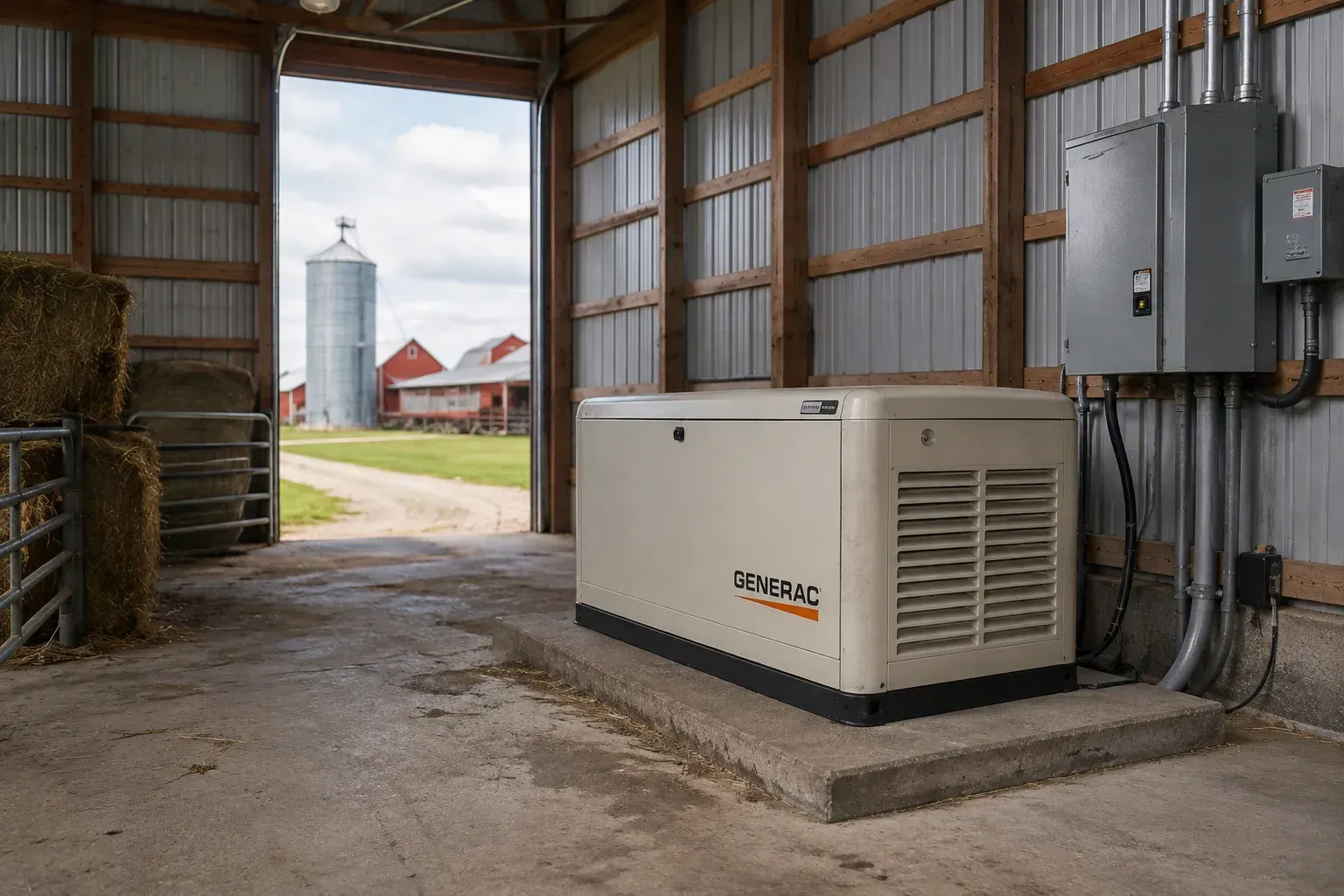
Standby systems provide agricultural backup power that activates within seconds. Unlike portable units, standby generators are permanently wired into the property's electrical system. This allows critical equipment to keep running without manual intervention.
For livestock operations, the stakes are higher. Loss of ventilation in a barn during summer or loss of heat in winter can affect animal welfare quickly. A reliable backup system helps maintain stable conditions.
How to Size a Standby Generator for a Farm
Generator sizing is one of the most important steps. Undersized units can fail under load, while oversized units cost more without added benefit.
A licensed electrician usually performs a load calculation that includes:
- Motors on grain bins, augers, and fans
- Milking and cooling equipment
- Well pumps and water systems
- Lighting and office circuits
- HVAC and ventilation systems
Motors often draw more power on startup than during regular operation, so the generator must handle this surge. A professional load assessment is the most accurate way to determine the right size.
Choosing Between Natural Gas, Propane, and PTO Generators
Different farms have different fuel preferences and infrastructure. The three most common options for agricultural use are natural gas, propane, and tractor-driven PTO units.
Natural Gas Standby Generators
These connect to an existing gas line and run continuously as long as the supply is active. They are common in areas with utility gas service.
Propane Standby Generators
These are useful for rural properties without natural gas access. Propane stores well and is widely available across Iowa.
PTO Generators
PTO units connect to a tractor's power take-off shaft. These are often chosen by farms that already have suitable tractors and prefer a non-automatic option. A Cummins generator for farms and Winco PTO units are commonly used in agricultural settings.
The right choice depends on your fuel availability, expected runtime, and how automatic you need the system to be.
What the Installation Process Looks Like
A typical farm standby generator installation in Harpers Ferry, IA includes several steps:
- Site assessment and load calculation
- Equipment selection and quote
- Concrete or gravel pad preparation
- Transfer switch installation
- Fuel line or PTO connection
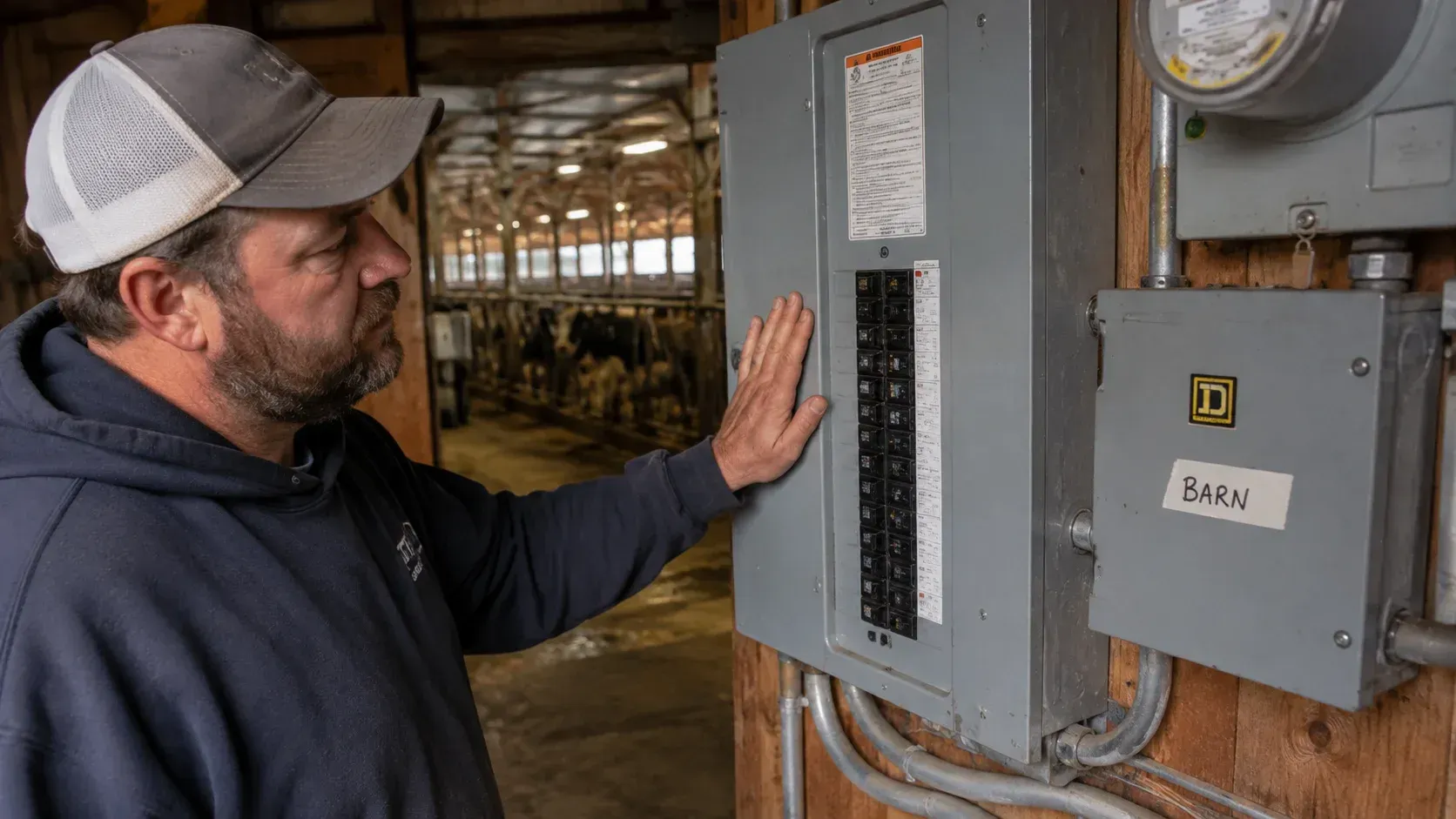
- Wiring to the main electrical panel
- Testing and commissioning
The transfer switch is the part that automatically shifts power between the utility and the generator. This component must be installed correctly to prevent backfeed, which can damage equipment and create safety risks for utility workers.
Permits, Codes, and Safety Considerations
Standby generator installation in Iowa must follow the National Electrical Code and any local requirements. Permits may be required depending on the county and the size of the system.
Safety considerations include:
- Proper grounding
- Clearances from buildings and combustible materials
- Ventilation around the unit
- Carbon monoxide protection if installed near occupied structures
- Compliant fuel storage and line installation
A licensed electrician familiar with rural and agricultural projects can help ensure all code and safety requirements are met.
Long-Term Maintenance and Reliability
A standby generator is only useful if it works during an outage. Regular maintenance keeps the system ready year-round.
Common maintenance tasks include oil and filter changes, battery checks, exercise cycles, and transfer switch testing. Many systems run a brief self-test each week to confirm they are functional.
Farmers should keep service records and follow manufacturer maintenance schedules. Service plans through local electrical contractors can simplify this process.
Working With a Licensed Local Electrician
Agricultural electrical work involves higher loads, three-phase power, and equipment that is not typical in residential settings. Working with an electrician experienced in farm projects helps ensure the system is sized, wired, and maintained correctly.
Local electricians also understand area weather patterns, common outage causes, and regional fuel availability. This local knowledge can be valuable during planning and installation.
Conclusion
Installing a standby generator on an Iowa farm is a long-term investment in operational stability. Understanding load requirements, fuel options, permitting, and maintenance helps farmers make informed choices that fit their property and budget.
By working with a qualified local electrician and reviewing the factors covered in this guide, farm owners can plan a system that supports their operation through routine outages and seasonal weather events.
Book a Generator Installation
Whit's Electric LLC provides generac generator maintenance support and related electrical services in Harpers Ferry, IA and surrounding areas. Contact us via email at wexford1332@gmail.com or call (563) 419-8218 for consultation and advice.
Frequently Asked Questions
How much agricultural backup power do most farms need?
We find that most small to mid-size farms need between 20 kW and 60 kW. Larger operations with dairy parlors or grain handling may require more, and a professional load calculation gives the most accurate answer.
We find that most small to mid-size farms need between 20 kW and 60 kW. Larger operations with dairy parlors or grain handling may require more, and a professional load calculation gives the most accurate answer.
We do not recommend it. Standby generator wiring, transfer switches, and fuel connections must follow electrical codes and typically require a licensed electrician and permits to install safely.
Is a Cummins generator for farms suitable for cold Iowa winters?
Cummins units are built for cold-weather performance. Adding a cold-weather kit and choosing the right enclosure helps ensure reliable starts during deep Iowa winter conditions.
How long does a standby generator typically last on a farm?
With regular maintenance, many standby generators last 20 to 30 years. Service life depends on hours of use, fuel quality, and consistent adherence to manufacturer maintenance schedules.
Do we need to test our generator regularly?
Yes. Most systems run a weekly self-test, but a full load test once or twice a year by an electrician helps confirm the unit can handle actual outage conditions.
Related Posts