Could a Backup Generator Keep Your Harper Ferry Farm Running Through an Outage?
CONTACT US
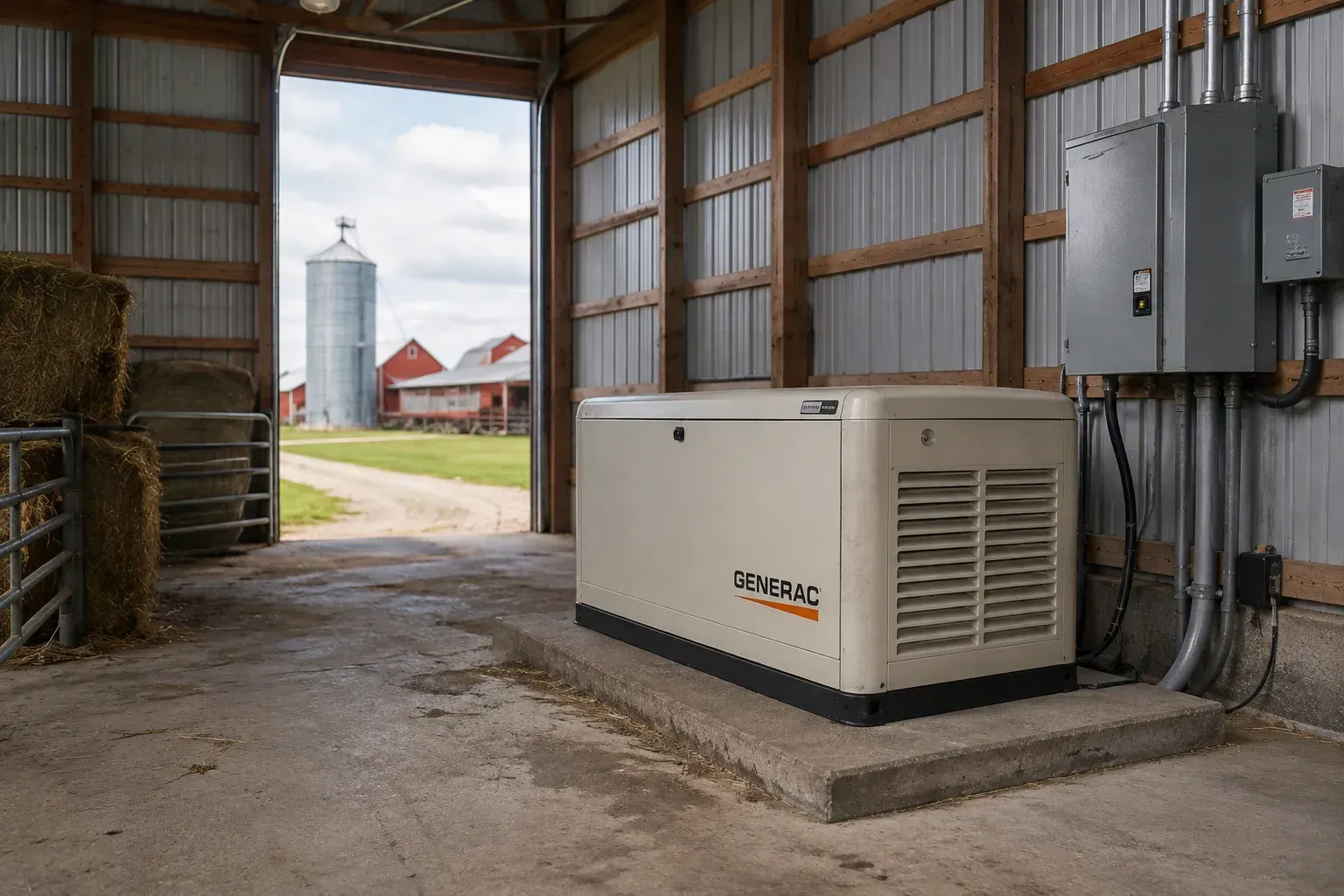
Table of Contents
- Introduction
- What a Backup Generator Actually Does for a Farm
- Farm Systems That Depend on Steady Power
- Standby vs. Portable Generators
- How to Size a Generator for Your Operation
- Fuel Choices and What They Mean
- Installation and Safety Basics
- Conclusion
- Wondering What Would Keep Running if the Power Dropped Today?
- Frequently Asked Questions
Key Takeaways
- A backup generator can keep essential farm systems running during an outage, including livestock ventilation, refrigeration, water pumps, and irrigation controls.
- Power outages in rural Northeast Iowa happen year-round, from summer storms to winter ice, not only in one season.
- Standby generators start automatically and cover whole systems, while portable units cost less but need hands-on operation.
- Choosing the right generator depends on your total electrical load, fuel type, and which systems you cannot afford to lose.
- Proper installation through a transfer switch is a safety requirement, not an optional extra, and is best handled by a licensed electrician.
Introduction
Yes, a backup generator can keep your Harpers Ferry farm running through an outage by supplying power to the systems that cannot afford to stop. It does not prevent outages, but it fills the gap between the moment the grid fails and the moment service returns, which on a rural line can be hours or days.
For farmers and agricultural businesses in Allamakee County, that gap is where the real risk sits. Livestock, refrigerated product, and running equipment do not wait for the utility, and an outage at the wrong time turns a routine day into a scramble. Understanding how a proper generator installation works helps you decide whether backup power fits your operation.
This article covers what a backup generator does, which farm systems depend on steady power, and the practical factors — including size, fuel, and installation — that go into choosing one.
What a Backup Generator Actually Does for a Farm
A backup generator is a standby power source that takes over when utility power stops. When wired into your electrical system correctly, it supplies electricity to selected circuits or your whole operation until the grid comes back.
The key word is essential. Few farms back up absolutely everything, and few need to. The point is to keep critical systems running so an outage becomes an inconvenience rather than a loss.
If you want the technical side of how these units convert fuel into usable power, this explanation of how generators work covers the basics. For most owners, though, the practical question is simpler: what needs to stay on, and for how long.
Farm Systems That Depend on Steady Power
The value of a backup generator for farms depends on what you are protecting. These are the systems most operations cannot let sit idle.
Livestock Ventilation and Water. Confinement barns rely on powered fans to control heat, humidity, and air quality. Without airflow, conditions inside can turn dangerous for animals within hours. Electric waterers and well pumps also stop, and livestock go without water long before they go without feed.
Refrigeration and Cooling. Dairy operations depend on bulk tank cooling to keep milk within quality standards. Any farm storing product, vaccines, or perishables faces spoilage when refrigeration goes down. These losses add up fast during a long outage.
Irrigation and Feed Systems. Irrigation controls, pumps, and automated feed augers all run on electricity. An outage during a dry stretch or a feeding window interrupts schedules that livestock and crops depend on.
The Home and Shop. Outages hit the farmhouse too. Furnaces, sump pumps, well water, and refrigeration in the home all go down with the grid, so backup power often protects the household alongside the operation.
Standby vs. Portable Generators
Farms generally choose between two setups, and each has clear trade-offs.
Standby Generators. A standby unit is permanently installed and wired to your electrical system through a transfer switch. When power drops, it starts automatically — usually within seconds — whether or not anyone is on the property. For livestock operations, that automatic start is the main advantage, since outages rarely happen at convenient times. The trade-off is a higher upfront cost and the need for professional installation.
Portable Generators. Portable units cost less and can move between buildings, which suits smaller operations with limited critical loads. The limitation is that someone has to be present to start, connect, and refuel them. In a storm at 2 a.m., that is a real constraint, and portable units must never be connected without a proper transfer switch.
How to Size a Generator for Your Operation
Sizing is where good decisions are made or missed. A unit that is too small cannot carry the load, and one that is oversized costs more than it needs to.
Start by listing what must run during an outage: ventilation fans, pumps, refrigeration, heaters, and household basics. Add up their running wattage.
Then account for startup surge. Electric motors draw several times their running wattage for a moment when they start, so the generator has to handle that spike, not just the steady load. This is why a professional load calculation is worth more than a rough guess.
Deciding which buildings and systems to cover also shapes the size. Backing up the whole farm needs a larger unit than covering only the barn and well pump.
Fuel Choices and What They Mean
Generators run on different fuels, and the right choice depends on what you can reliably store and access.
Propane stores indefinitely without degrading and performs well in cold weather, which makes it a common choice on Iowa farms. It does require a tank of adequate size.
Diesel is already on hand at many farms and offers strong output, but it needs winter treatment to prevent gelling in extreme cold.
Natural gas provides a continuous supply where a line is available, removing the need to store fuel, though rural availability varies.
Match the fuel to a multi-day outage. Whatever you choose, the goal is a supply you can count on when a storm keeps crews away for days.
Installation and Safety Basics
Installation is not the place to cut corners. A backup generator must connect through a transfer switch, which safely separates your system from the utility grid.
Without one, a generator can backfeed electricity onto the utility lines. That is dangerous for line workers trying to restore power and is prohibited by electrical code. This single component is why agricultural generator installation belongs with a licensed electrician.
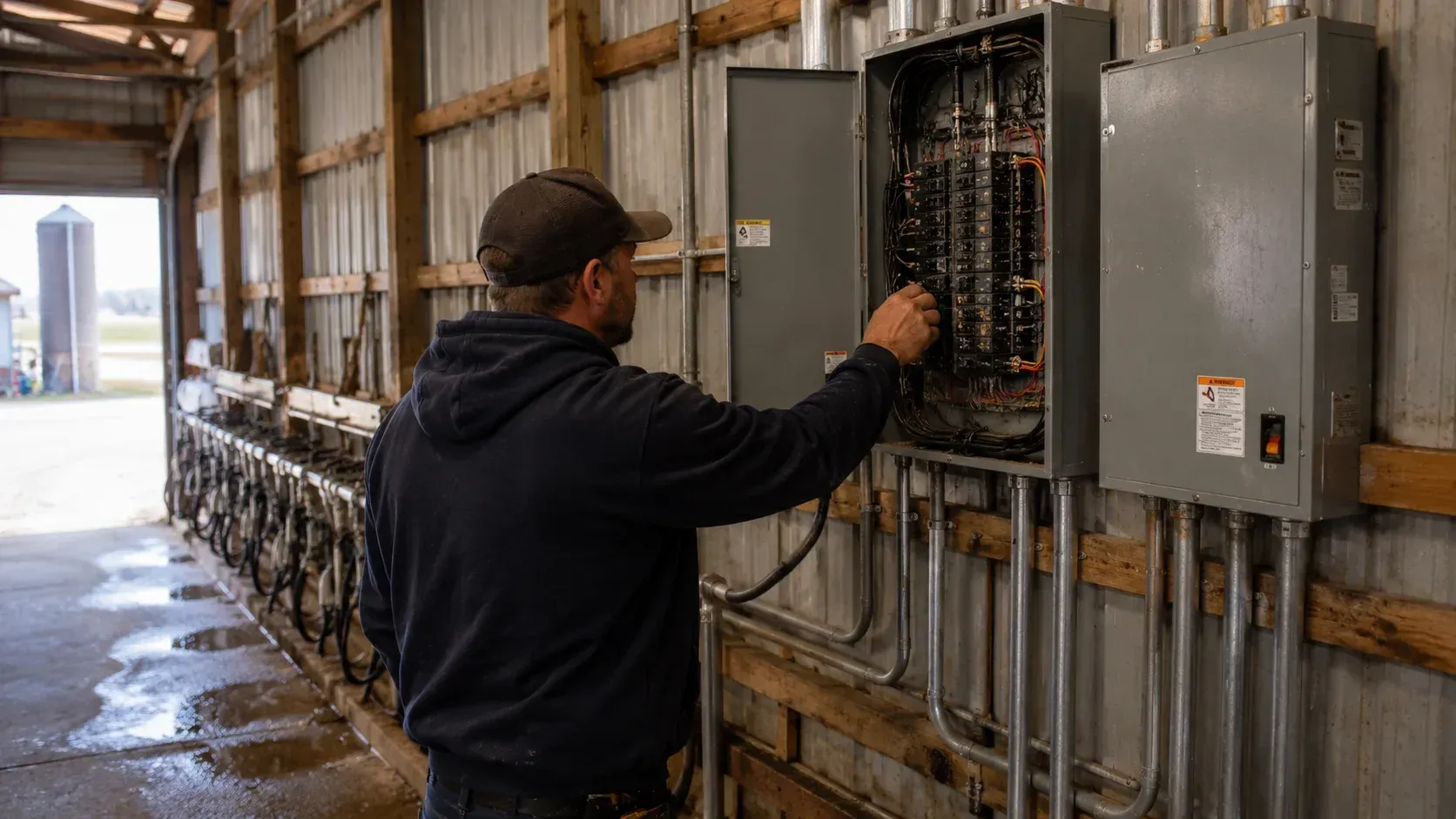
An electrician can also confirm your existing wiring and panel can handle the setup. Older farm systems sometimes need updates before a generator can be integrated safely, and combining backup power with the right farm equipment matters for a system that holds up over time.
Conclusion
A backup generator can keep a Harpers Ferry farm running through an outage by powering the systems that cannot stop — including ventilation, water, refrigeration, and irrigation. Rural outages happen in every season, so the value is not tied to one time of year.
The right choice comes down to a few honest questions: which systems must stay on, how much power they draw at startup, what fuel you can reliably store, and whether you need automatic or hands-on operation. Standby units offer automatic coverage at a higher cost, while portable units trade convenience for a lower price. Whatever direction fits, correct sizing and safe installation through a transfer switch are what make backup power dependable rather than risky.
Wondering What Would Keep Running if the Power Dropped Today?
It is a fair question to sit with, and the answer usually depends on details specific to your operation. If you are weighing backup power for your farm, home, or shop in Harpers Ferry or the surrounding area, feel free to contact us with your questions. A straightforward conversation about your buildings and equipment can help you see where things stand, with no pressure and no obligation.
Frequently Asked Questions
It depends on total electrical load. A small operation may manage with a smaller unit, while livestock or dairy farms often need larger systems to cover ventilation, refrigeration, and pumps. A load calculation of essential equipment is the accurate way to size one.
It can, if sized for the full load, though many farms choose to cover only essential systems to keep the unit and cost reasonable. Deciding what must stay on is the first step in sizing.
That depends on fuel supply and load. A generator runs as long as it has fuel, so the practical limit is how much propane, diesel, or natural gas you can supply during an extended outage.
It can cover limited loads through a proper transfer switch, but it requires someone present to start and refuel it. Barns with continuous ventilation needs are usually better matched with an automatic standby unit.
A transfer switch safely separates the generator from the utility grid. Without one, the generator can backfeed the lines, which endangers utility workers and violates electrical code.
Propane stores well and handles cold weather, diesel offers strong output but needs winter treatment, and natural gas provides continuous supply where a line exists. The best choice depends on what you can reliably access.
Yes. Installation involves transfer switch wiring, load calculations, and connection to your electrical panel, all of which carry shock and fire hazards. A licensed electrician handles these safely and to code.
Related Posts