What Happens If Your Well Runs Dry While a Backup Generator Is Powering Your Farmhouse?
CONTACT US
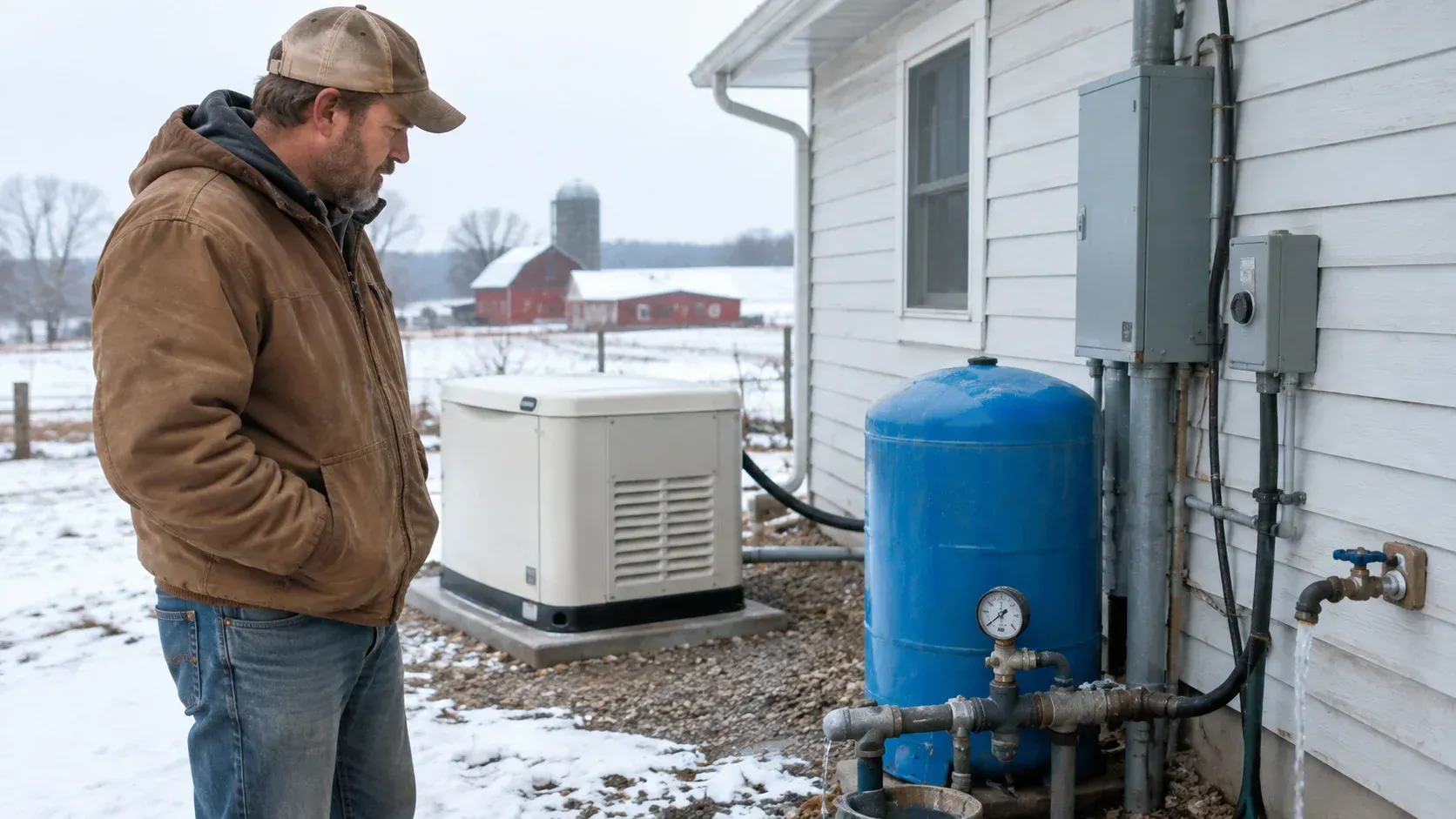
Table of Contents
- The Short Answer
- Why the Generator Keeps the Pump Running Into an Empty Well
- What a Dry Run Does to a Well Pump
- Why This Happens More During Winter Outages
- How to Protect the Pump While on Generator Power
- Common Misunderstandings
- What Typical Online Advice Overlooks
- Conclusion
Key Takeaways
- If your well runs dry while a backup generator is powering the farmhouse, the pump can keep running with no water to move, and running dry is one of the fastest ways to damage a well pump.
- A generator does not know the well is empty. It simply supplies power, so the pump will keep trying to pump unless something stops it.
- Submersible pumps rely on the water around them for cooling and lubrication, so a dry run can overheat and burn out the motor in a short time.
- Winter outages raise the risk because households often draw more water during a storm while a frozen or low well is harder to notice.
- Low-water protection devices and simple habits during an outage can prevent a dry run, and a licensed electrician can advise on safe generator and pump setups.
Introduction
If your well runs dry while a backup generator is powering your farmhouse, the pump can keep running with nothing to move, and a dry run is one of the quickest ways to overheat and burn out a well pump motor. The generator does not sense water level. It only supplies electricity, so the pump keeps doing its job even when there is no water left to pump, and that is exactly when the damage happens. Homeowners and rural property owners who lean on reliable agricultural and electrical services during outages are often surprised that backup power can expose the pump to a risk the grid usually masks.
This matters because an outage is already a stressful time, and losing the well pump on top of it turns a temporary inconvenience into a repair bill and a longer stretch without water. The good news is that the risk is understandable and largely preventable. This article explains why the pump keeps running into an empty well, what a dry run actually does, why winter raises the stakes, and the practical steps that protect your water system while you are on generator power.
The Short Answer
Direct answer: A well pump running dry on generator power can overheat and fail because most pumps depend on the water they move to cool and lubricate the motor. The generator will keep feeding the pump power regardless of water level, so without a low-water cutoff or careful water use, the pump can run dry long enough to be damaged.
The core issue is simple. Grid or generator, the pump cannot tell the difference, and neither power source monitors your well. The protection has to come from the pump system itself or from how you manage water during the outage. On generator power specifically, people sometimes run the pump harder or longer than usual, which is why the topic deserves attention.
Why the Generator Keeps the Pump Running Into an Empty Well
Direct answer: A backup generator supplies electricity on demand and has no awareness of your well's water level, so it powers the pump the same whether the well is full or empty.
A generator's job is to replace the utility supply. When the pump's pressure switch calls for water, the pump turns on, and the generator provides the power. Nothing in that chain checks whether water is actually present in the well. Understanding how a generator works makes this clearer: it converts fuel into electricity and delivers it, nothing more.
That is not a flaw in the generator. It is doing exactly what it should. The gap is that the responsibility for stopping a dry run sits with the pump's own controls and with the person managing the outage, not with the power source.
The Pressure Switch Is Not a Water Sensor
A well system's pressure switch turns the pump on and off based on water pressure in the tank, not on how much water is in the ground. If the well level drops below the pump intake, the pump can keep cycling and running while pulling in little or no water, because the switch is still asking for pressure it cannot get.
What a Dry Run Does to a Well Pump
Running dry is hard on a pump because most pumps are not designed to operate without water passing through them.
Submersible Pumps Lose Cooling and Lubrication
Most modern wells use a submersible pump that sits down in the water. That surrounding water cools the motor and lubricates moving parts. When the well drops below the pump, the motor loses its cooling, heats up quickly, and can burn out. This can happen faster than many owners expect.
Seals and Components Wear or Fail
Without water, friction and heat rise inside the pump. Seals, bearings, and other components wear faster or fail outright. Even if the motor survives one dry run, repeated dry cycling shortens the pump's life.
Air and Sediment Cause Further Problems
A low well often means the pump pulls in air and stirred-up sediment. Air causes the pump to lose prime and run inefficiently, and sediment is abrasive, adding wear to a system already under stress.
The practical result is that a pump failure during an outage can mean no water until a new pump is installed, which on a rural property is both costly and badly timed.
Why This Happens More During Winter Outages
A dry run can occur any time, but winter outages stack the odds against you. This is where the tertiary concern of a winter farm power outage becomes specific.
First, households and farms often use more water during a storm, not less. People are home, livestock still need water, and demand on the well rises while you are trying to stretch a generator's capacity.
Second, winter conditions can lower or complicate well performance, and a frozen line or low recovery is harder to notice when everything is already disrupted. Add a long outage, and a well that would normally recover between uses may not keep up.
Third, outages in rural areas can last for days after ice or wind damage, which means the pump may run far more cycles on generator power than it would in a brief grid blip. Keeping the whole system dependable is part of why professional electrical support for farms matters heading into winter.
How to Protect the Pump While on Generator Power
The risk is manageable with a mix of equipment and habits. Here is a practical approach.
Install Low-Water Protection
A low-water cutoff or pump protection device senses conditions like loss of water or a dry run and shuts the pump off before damage occurs. This is the most direct safeguard, because it protects the pump whether you are paying attention or not. An electrician or well professional can advise on options suited to your system.
Manage Water Use Deliberately During an Outage
Spread water use out rather than running it hard. Avoid long, continuous draws that could pull the well down faster than it recovers, especially during a multi-day outage when the well has less chance to replenish.
Confirm the Generator and Pump Are Set Up Correctly
The pump should be on an appropriately sized circuit, and the generator should be installed to handle the pump's startup surge along with your other loads. A sound generator installation through a proper transfer switch keeps the whole system safe and predictable, and an electrician can confirm the pump circuit is part of that plan.
Know the Signs of a Dry Run
If the faucets sputter, pressure drops oddly, or the pump seems to run constantly without building pressure, treat those as warnings. Shutting the pump off and letting the well recover is better than letting it run dry.
Keep an Emergency Water Reserve
Storing drinking and livestock water ahead of winter gives you a buffer, so you are not forced to lean on a struggling well during the worst of an outage.
Common Misunderstandings
"The generator will protect the pump." What is actually true: a generator only supplies power. It has no sensor for water level and will run the pump into an empty well just as the grid would. Protection comes from the pump's controls, not the power source.
"A pump can run dry for a while without harm." What is actually true: many submersible pumps can be damaged by a relatively short dry run because they lose the water that cools and lubricates them. Assuming you have a long grace period is risky.
"If water still comes out, the well is fine." What is actually true: a well can deliver reduced flow while the level is dropping toward the pump intake. Water at the tap does not confirm the well is keeping up, especially under heavy outage-day use.
"This is only a concern for old or shallow wells." What is actually true: any well can be drawn down faster than it recovers if demand is high and the outage is long. Depth and age affect the margin, not the basic risk.
What Typical Online Advice Overlooks
General backup-power advice tends to focus on sizing a generator and keeping the lights on, and it often skips the well pump entirely.
The pump is treated as just another load. Most guides list the well pump as a wattage number to cover and stop there. They rarely mention that the pump can be damaged by conditions in the well itself, independent of whether the generator is sized correctly.
Water demand during an outage is underestimated. Advice assumes normal usage, but outage days often bring higher water use at the same time the household is trying to conserve generator fuel. Those two goals can pull against each other.
Low-water protection is rarely mentioned. Simplified content seldom raises dry-run protection devices, which are the most effective safeguard. The convenient advice is "run the pump off the generator," not "make sure the pump is protected while you do."
Recovery time is ignored. A well needs time to replenish. Guides that treat water as always-on miss that a long outage with steady draw can outpace a well's recovery, which is precisely when a dry run becomes likely.
Conclusion
A well running dry while a backup generator powers your farmhouse is a real and often overlooked risk, because the generator will keep the pump running no matter what is happening down in the well. Most pumps depend on the water they move for cooling and lubrication, so a dry run can overheat and damage the motor quickly, leaving you without water at the worst possible time. Winter outages raise the odds, since water demand climbs while well recovery and conditions can work against you.
The encouraging part is that this is largely preventable. Low-water protection devices, deliberate water use during an outage, a correctly installed generator and pump circuit, and a basic water reserve all reduce the risk substantially. Backup power is a strong tool for riding out an outage, and understanding how it interacts with your well is what keeps that tool from quietly creating a new problem.
Wondering If Your Generator and Well Setup Is Ready for Winter in Shorewood, WI?
If you rely on a backup generator and a well, it is worth understanding how the two work together before the next storm. You are welcome to
reach out to Whit's Electric with your questions about backup generator and well pump setups for your home or property. A straightforward conversation about your system can help you plan sensible protections, with no pressure and no obligation.
Frequently Asked Questions
Will a backup generator stop my well pump from running dry?
No. A generator only supplies power and has no sensor for water level. It will run the pump into an empty well the same way the grid would. Dry-run protection has to come from the pump's own controls or from careful water use during the outage.
How quickly can a well pump be damaged by running dry?
It can happen faster than many owners expect, because submersible pumps lose the water that cools and lubricates the motor. The exact time varies by pump and conditions, so a dry run should be avoided rather than timed.
How do I know if my well is running dry during an outage?
Watch for sputtering faucets, dropping or erratic pressure, and a pump that runs constantly without building pressure. These signs suggest the well level is low, and shutting the pump off to let it recover is safer than continuing.
Can I add protection to keep my pump from running dry?
Yes. Low-water cutoff or pump protection devices sense a dry-run condition and shut the pump off before damage occurs. A licensed electrician or well professional can recommend an option suited to your system.
Why is this a bigger risk in winter?
Winter outages often bring higher water use while recovery and well conditions can be less favorable, and storm-related outages can last for days. More pump cycles over a long outage increase the chance the well is drawn down faster than it refills.
Related Posts