Why Does an Old Farmhouse in Allamakee County Still Have Aluminum Wiring, and Is That Dangerous?
CONTACT US
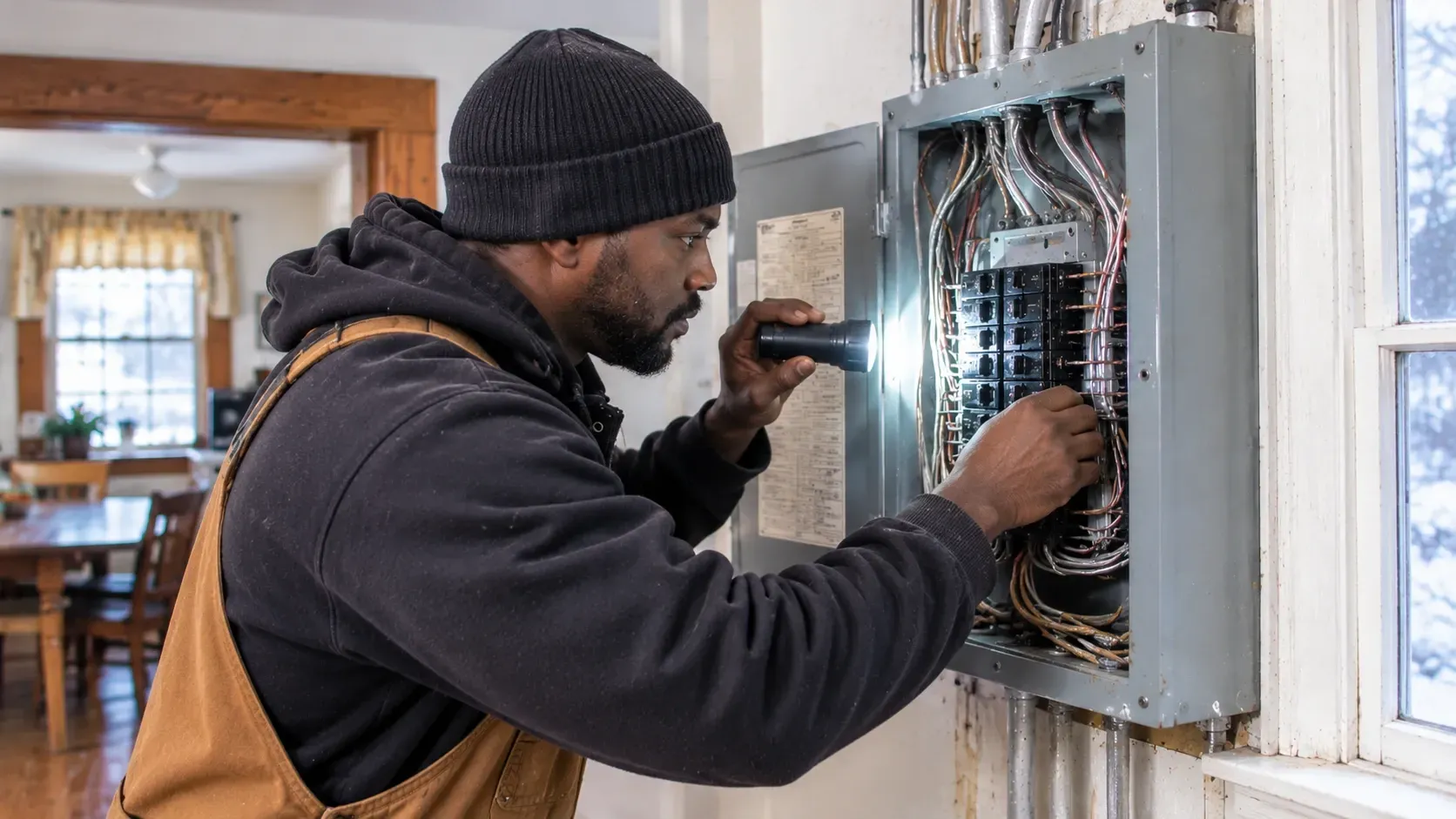
Table of Contents
- Introduction
- Why Aluminum Wiring Ended Up in Farmhouses at All
- The Part That Actually Fails Is the Connection
- Branch Circuits Are Not the Same as Service Cable
- Warning Signs You Can See Without Opening Anything
- What Not to Do About Aluminum Wiring Yourself
- What an Inspection Actually Looks For
- Conclusion
- Worried About the Wiring in an Old Farm House?
- Frequently Asked Questions
Key Takeaways
- Copper got expensive, aluminum was cheap and legal, and a lot of houses got wired with it.
- The wire in the wall is rarely the problem. The terminations are.
- Aluminum at your meter or service cable is normal and current. That is a different thing entirely.
- Warm cover plates, a hot-plastic smell or flickering on one circuit are reasons to stop and call.
- Tightening a terminal yourself can make the connection worse rather than better.
Introduction
It is there because copper prices spiked and aluminum was the cheap, legal alternative at the time, and yes, it carries a real fire risk, though the hazard sits at the terminations rather than in the wire running through the wall, which is why tracking down hot spots and failing connections is the work that matters here.
We have been doing electrical work around here since 2005, and plenty of the older houses on farms in this part of Iowa were built or rewired in that window.
Why Aluminum Wiring Ended Up in Farmhouses at All
It was not a shortcut. It was the normal choice for a few years.
In the late 1960s and early 1970s copper prices climbed hard. Aluminum conducts electricity well, it costs less, and it weighs less. At the time it was perfectly acceptable for branch circuits under the codes then in force, so builders used aluminum wiring because it was the sensible material that year.
What nobody had yet was decades of data on how those connections behave in service. That came later, after the failures started showing up, and the practice changed.
Rural housing stock in this area makes it more common than people expect. Farmhouses get rewired in stages, often by different hands in different decades, so it is entirely normal to find one wiring era in the kitchen, another in an addition, and something else again out in the shop.
The Part That Actually Fails Is the Connection
Three properties of aluminum stack up, and all three concentrate at the points where the wire is screwed down.
- It expands and contracts more than copper. Every time a circuit carries load it warms and then cools. Aluminum moves more through that cycle than copper does, and over thousands of cycles that works a screw terminal loose.
- It creeps under pressure. Held under a screw, aluminum slowly deforms and flows away from the clamping force. The connection that was tight on installation day is not as tight ten years on.
- It oxidizes, and the oxide resists current. Copper oxide still conducts reasonably. Aluminum oxide does not, and it forms readily wherever the metal is exposed.
Put those together and you get a connection that is both looser and more resistive than it should be. Resistance makes heat. Heat accelerates all three problems above.
That is the loop. It runs at outlets, switches, splices in junction boxes and terminations in the panel. The wire inside the wall cavity, with nothing happening to it, is generally fine, which is why the fix here is almost never ripping everything out.
Branch Circuits Are Not the Same as Service Cable
This one causes unnecessary alarm, so it is worth separating clearly.
Aluminum conductors are standard, current practice for service entrance cable and for large feeders. Your utility's service drop is very likely aluminum. Feeders running out to a shop or a barn are often aluminum. None of that is a defect or a legacy problem, and it is installed new today.
What the fire-risk conversation is about is small aluminum conductors used for branch circuits, the ones feeding ordinary outlets and light switches inside a house. Different size, different number of terminations, different history.
So if you open your meter base or your main panel and see aluminum, that alone tells you nothing alarming. What matters is what is feeding the receptacles.
Warning Signs You Can See Without Opening Anything
Every one of these is observable with the cover plates on. None of them requires you to take anything apart.
- Cover plates that feel warm on outlets or switches, particularly ones carrying real load
- Discoloration or browning around a plate, or a plate that has gone brittle
- A smell of hot plastic near an outlet or in a room with no other explanation
- Lights flickering on one circuit, especially when something on that circuit switches on
- Buzzing, sizzling or crackling from a device
- An outlet that works intermittently, or has quietly stopped working
- Breakers tripping on a circuit that has not changed
Any of those means stop using that circuit and get somebody out. A warm cover plate is a connection making heat, and a connection making heat inside a wall cavity next to wood is the whole problem in one sentence. The same logic applies to a warm electrical panel, which we have written about separately.
What Not to Do About Aluminum Wiring Yourself
This is a licensed trade for a reason, and this particular material punishes good intentions.
- Do not open devices to look. There is nothing useful to see that is worth the risk.
- Do not tighten the terminals. This is the one that surprises people. Over-tightening an aluminum conductor deforms it further and can leave the connection worse than it was.
- Do not swap in an ordinary receptacle or switch. Devices have to be rated for the conductor material, and a standard device on aluminum is a new problem rather than a repair.
- Do not splice aluminum to copper with ordinary connectors. Joining dissimilar metals needs connectors made for that purpose.
- Do not treat anti-oxidant paste as a repair. It has its place in a proper installation. It is not a fix on its own.
We are also not going to print a repair method here. Recognized approaches exist for dealing with aluminum branch circuits, they are not interchangeable, and which one suits a given house is a decision for a licensed electrician standing in it with the panel open.
What an Inspection Actually Looks For
Mostly it is about scope, because the answer varies enormously between houses.
Someone looking at this properly is working out four things. Whether the branch wiring actually is aluminum and not just the service. How much of the house is on it. What condition the terminations are in. And whether anything has already overheated.
Houses rewired in pieces often turn out to be only partly affected, and that changes the recommendation completely.
A house around Allamakee County that has had additions, a new kitchen and a detached shop added over fifty years is rarely one single wiring system, and an inspection sorts out what is actually there before anybody talks about remedies. On the farm side, the same thinking applies to buildings where the wiring has been checked regularly or not at all, and to systems that have quietly ended up working harder than they were built for.
One more thing worth knowing: some insurers ask about aluminum branch wiring, and policies vary on how they treat it. That is a question for your agent and your policy rather than for us, and it is worth asking before you need to.
Conclusion
Walk your house and put a hand on the cover plates, especially in the rooms with the heaviest loads. That costs nothing and it is the single most useful thing a homeowner can do about this. If any of them is warm, if anything smells hot, or if one circuit flickers when the toaster goes on, stop using that circuit and have someone look. Aluminum wiring is not an emergency by itself. A connection already making heat is a different matter, and it does not announce itself any louder than a warm plate.
Worried About the Wiring in an Old Farm House?
We handle inspections and troubleshooting, which means tracking down tripping breakers, hot spots and failing connections, and telling you plainly what is there. Whit's Electric has been local since 2005, more than 20 years serving farms and businesses around Harpers Ferry, Waukon, Decorah and across Allamakee, Winneshiek and the surrounding counties into Wisconsin. We are a fully licensed and insured electrical business and we are open 24/7, because outages and breakdowns do not keep business hours. Call (563) 419-8218 or
call or message us to get on the schedule.
Frequently Asked Questions
Is aluminum wiring in a house dangerous?
It carries a real fire risk, and the risk concentrates at the terminations rather than in the wire itself. Aluminum expands more than copper, creeps under screw pressure and oxidizes, all of which loosen connections and make heat. The wire inside the wall is usually not the problem.
Why was aluminum wiring used in houses?
Copper prices rose sharply in the late 1960s and early 1970s, and aluminum was cheaper, lighter and accepted under the codes of the time. It was the ordinary choice for a few years, not a shortcut, and the practice changed once the connection failures became clear.
Does aluminum wiring have to be replaced?
Not automatically, and not always entirely. How much of the house is on aluminum branch circuits, and what condition the terminations are in, decides that. Recognized repair approaches exist, and which one applies is a licensed electrician's judgment.
Can I just tighten the screws on my outlets?
No. Over-tightening deforms aluminum further and can leave the connection worse than it was. Devices also have to be rated for the conductor material. This is not a homeowner repair.
Is the aluminum cable at my meter a problem?
Almost certainly not. Aluminum service entrance cable and large feeders are standard current practice and are installed new today. The concern is small aluminum conductors feeding ordinary outlets and switches.
Related Posts